Jesus, Alone.

… Jesus took with him Peter and James and his brother John and led them up a high mountain, by themselves. And he was transfigured before them, and his face shone like the sun, and his clothes became dazzling white.Suddenly there appeared to them Moses and Elijah, talking with him.Then Peter said to Jesus, “Lord, it is good for us to be here; if you wish, I will make three dwellings here, one for you, one for Moses, and one for Elijah.” While he was still speaking, suddenly a bright cloud overshadowed them, and from the cloud a voice said, “This is my Son, the Beloved; with him I am well pleased; listen to him!” When the disciples heard this, they fell to the ground and were overcome by fear.But Jesus came and touched them, saying, “Get up and do not be afraid.” And when they looked up, they saw no one except Jesus himself alone. [from Matthew’s Gospel 17.1-9]

All those things which demand our time and our attention. These compelling events before us, which elicit the response of our action, or at least profound concern. Recent happenings leave us dumbfounded, unsure of which step to take, which words to say, what to feel.

As followers of Jesus, we watch his interactions with many diverse people; storytelling, feeding, chastising, blessing, inspiring, forgiving, healing. These consistently human moments can distract – even mislead – us into engaging with Jesus solely as the astonishing person that we see and hear.

Jesus exhibits the joy and grief and anger and compassion of every fully human being. We are in his company, and his hands and feet and voice are like our own. We will achieve great things together.  

We see the need and rally to the cause. The needs are many, the wounds are deep.

Those politicians and others who want us to discard God and despise our neighbours rely on our exhaustion and eventual despair. Worse, they want to curdle our passion into hatred – someone, something, any one or thing – enlisting us in their crippled cadre.

Which is why at the hinge of Jesus’ journey through Matthew’s Gospel, Jesus ascends a mountain with three friends. Which is why a moment described (and entirely beyond description) happens before their eyes.

God interrupts the plans and purposes of each of us, to remind us that Jesus is not only utterly human, but the beloved Son of God. We are frantic to contain the moment, posting it to Instagram, or its miserly equivalents. Before we are able to focus our cameras and our lives, we are in the presence of Jesus, alone.

It is simply Jesus, Son of God.

A moment of miracle and wonder, which healed no wounds and brought no justice, and which calls us to remember that Jesus is the story of God in the world. Peter has already felt Jesus’ reprimand, as he earlier sought to prescribe Jesus as warrior or monarch. We are reminded that on this journey we are following the One who suffers at our hands and whose life is given for the life of the broken world.

This is where our faith finds its bearings. We cannot defeat the systems which fashion evil and injustice, although we must speak and act for all those who cannot speak and act for themselves, or believe themselves alone. We require the guidance of God’s Spirit to navigate these paths and discern where stumblings and missteps are prevalent.

It is difficult not to be afraid.

We do not walk an untravelled road; Jesus is before us, and beside us. The saving of creation is utterly in the hands of God. It is for us to bear witness with our lives. Our hope is found in Jesus Christ, alone.  

Communion | Rob Hardy

There’s no bread.
The bakers have gone into hiding.
The seats at the table are empty.
The Twelve are marching with the thousands.
The streets are filled with a new song.
Only Judas sits at Target Plaza, counting his silver,
while Pontius Pilate issues a carefully-worded statement.
Meanwhile the centurions have quotas to fill.
But out on the streets there’s a Communion.
Jesus takes the city in his hands and says,
“This is my body, broken for you.”

Rob Hardy
2nd February, 2026

God & Neighbour. & Worship.

“Why do we fast, but you do not see?
Why humble ourselves, but you do not notice?”
Look, you serve your own interest on your fast day,
and oppress all your workers …
… Is not this the fast that I choose:
to loose the bonds of injustice, to undo the thongs of the yoke,
to let the oppressed go free, and to break every yoke?
Is it not to share your bread with the hungry,
and bring the homeless poor into your house;
when you see the naked, to cover them,
and not to hide yourself from your own kin?
[Isaiah 58.1-12]

At the heart of every Christian community resides the act of worship.

Worship may be our simple act of prayer, which draws us to God and to each other, or a full liturgical movement of scripture, song and silence, prayer, proclamation and our opportunity to respond to the invitation of God. Worship turns our attention – and our hearts – toward God, In hope and appreciation.

One of our church’s ancestors, John Wesley, saw holy communion as a “converting ordinance”, where people’s hearts are changed by the articulate presence of Christ in bread and wine.

Our more recent forebears, when crafting the Basis of Union, spoke almost entirely of worship as wedded to witness and service. The clear intent is to assert that each element is affected by, and affects, each other.

Our God of the Hebrew Scriptures speaks through Isaiah to challenge the worshipping community, time and again. Isaiah’s song is drawing towards its conclusion. This wonderful piece of poetry and prophecy speaks to the heart of his community, and to each which has heard these words since.

There is a profound resonance with faith communities even now. as we enquire of God as to why our community hasn’t flourished; alternatively, we wonder how our discipleship appears to remain unchanged, even as our attendance grows.

Isaiah’s community remonstrates with God. God replies that their worship and their fasting, even the questions they are asking, arise solely from self-interest. “Our worship, our fasting, our humility” are all styles with which we are accustomed, in our contemporary world where self-interest is lauded and preyed upon – for marketing, for elections, for “salvation”.    

When Jesus is asked about the greatest commandment, his answer defines our lives and, thus, our worship. True worship is when we turn to God, and are attuned to our neighbours.  

We can fast all we like, but if our neighbour remains hungry, what does it mean? We can confess, hear forgiveness and pass the peace, but what if we still refuse to forgive? If our employees remain unfairly paid, if our neighbours are persecuted for their faith, or their race, or their sexuality, what does it matter if we raise our hands in worship and kneel for bread and wine?

We know that worship, witness and service are bound together. When they are separated, they risk becoming the empty actions of self-congratulation.

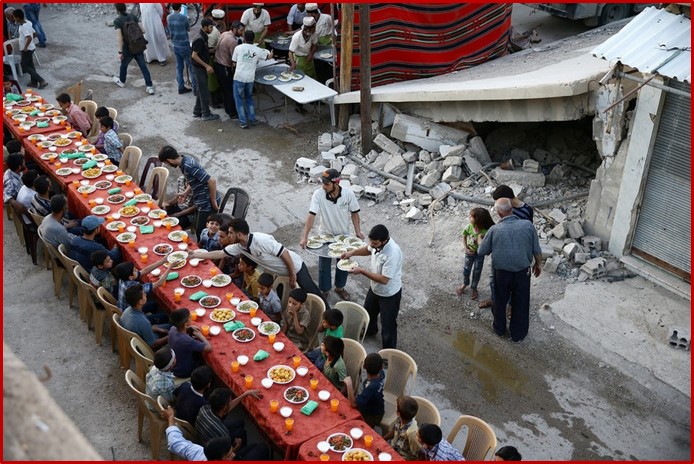
When we worship, we turn our lives to Jesus Christ, and the world for which Christ died. As such, we serve that world, with bread and justice and hope. We bear our witness in our bodies and our words, a witness articulated in the bread we offer to all who hunger.

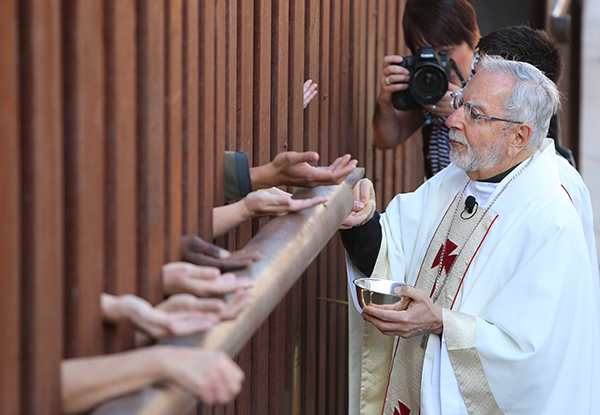
In turn, our worship is transformed by the stories and the lives which return to us from our witness and our service. Wesley’s converting ordinance is not constrained by liturgy, or church walls; it is discerned when we share our bread with those who are hungry, when we welcome the homeless and when we clothe those in need with garments and dignity.

Salt for the earth. Light for the world. Flavoured and illumined by the risen, crucified Christ.

What, Then, Shall We Say?

Consider your own call, brothers and sisters: not many of you were wise by human standards, not many were powerful, not many were of noble birth. But God chose what is foolish in the world to shame the wise; God chose what is weak in the world to shame the strong; God chose what is low and despised in the world, things that are not, to reduce to nothing things that are,so that no one might boast in the presence of God. [Paul’s First Letter to Corinth 1.26-29]

There was a recent post floating around Instagram, essentially stating that if sermons did not address the misuse of power by the state, then we have betrayed our calling as preachers.

I assume that this reflects what has been happening in the United States over these last months and particularly the recent appalling deaths of citizens in Minnesota.

The social fracturing in the United States is disturbing, not least the state-sponsored violence. It may be tempting to imagine (wrongly) that they are the essential story; however, injustice, corruption and government violence fill many pages of history, including the Scriptures.

At this moment there are several nations where criminality and suffering attend daily life. If we mention the suffering of Gaza, we dare not keep silence about Iran’s citizens, or Sudan; if we speak against the depredations of the Russian state in Ukraine, we must similarly address how the Israeli government’s actions are frequently unchallenged. As Australians, our own original sin remains unreconciled, as our First Nations continue to die in custody, while we avert our eyes to where we feel less implicated.

These are only the most recently written stanzas in our human history; the lament is long, indeed.

The gospel task of the preacher, surely, is to remind each of us of how God speaks hope and life into our world. The second task of the preacher is to remind those who listen of our place within God’s intention, as parables of the reign of God.

The snare is to believe that the story starts with us – our strength, or our failure which motivate God. Thus, we name the politics, or the persecution first, and place ourselves at the centre. We see the injustices, whether they are personal, or on a grander scale, and shape God’s story to attend to our own.

The readings for this week call us back to the foundations of who we are. The Prophet Micah asks God, on our behalf, what is our responsibility. Justice, mercy and humility are the measures of our faith. A meme for all the ages.

One of Jesus’ earliest sermons identifies those who are truly blessed – those whose lives are marked by spiritual poverty, meekness, justice, mercy, peace-making and their own persecution – and whose blessing are as completely contradictory to our world today as the lives of those to whom Jesus first spoke these words.

So how shall we preach, in the church catholic, where many preachers abdicate discernment and use ChatGPT to thread the needle?

Paul reminds us of our calling. We preach the madness of Christ crucified, the foolishness of a God who suffers and dies, the scandal of a God who becomes weak.

This is the gospel; for all those who are overlooked, who are nameless, or have been told they have no value. It is for those who believe they are the centre of the story, that money, or power, or violence, guarantee them life – ephemeral or eternal.

The measure of the gospel is the measure of our world and of our lives; Christ crucified.

And risen.

The readings for this particular Sunday, the fourth of Epiphany, are Micah 6.1-8, I Corinthians 1.18-31 and Matthew 5.1-12

(Re)Make Up Your Mind

From that time Jesus began to proclaim, “Repent, for the kingdom of heaven has come near.”  As he walked by the Sea of Galilee, he saw two brothers, Simon, who is called Peter, and Andrew his brother, casting a net into the sea – for they were fishermen.And he said to them, “Follow me, and I will make you fish for people.” Immediately they left their nets and followed him. [Matthew’s Gospel 4.17-20]

One of the most quoted (and misquoted) poems in recent times is Yeats’ The Second Coming. Some would see it as prophetic, with a word for our times, as though it arose untainted by context. However, Yeats published it in 1920, in the ashes of the World War, when everything which was unbroken was changed, changed utterly.

Perhaps the words which are consistently accurate since Yeats’ crafting remain “The best lack all conviction, while the worst/Are full of passionate intensity.”

One of the stains on modern social discourse is the apparent inability of people to admit fault, to stand corrected, and to change our minds. Adamantine certainty and polemic are the weapons we carry into our conversations, with no option but victory.

We assert how the world works and what needs to be addressed.  

Thus, poetry like that of Yeats.

Jesus arrives in Galilee and announces that everything is transformed; the reign of heaven is brushing against us. Change your minds!

What we translate here as “repent” has less to do with bad behaviour than it has to do with understanding everything anew. In the midst of our polarising world, God has appeared in Jesus Christ; nothing is what it was. Change your minds.

What you imagined about God, aloof and omnipotent, is turned on its head. What you have proclaimed about our brokenness as human beings, beyond the reach and embrace of God, is tangibly untrue. When we have insisted that all our efforts must be exercised in seeking God, we discover that God insists on seeking us, in Jesus.

Change your minds.

Change your minds, you preachers, you party politicians, you social media polemicists. Change your minds, you who believe we are destined for despair. Change your minds you who believe only people like us can know the hope and heart of the living God.

When Jesus commands us to repent, to be converted, to feel the brush of God’s reign, what will it mean for how we speak and act about those things on which our minds are made up? What about the way we vote, or speak about others? What about Gaza, and Israel? What about those who are different from us? What about reconciliation with our First Nations?

What if we have been mistaken? What if Jesus is inviting us to new life?

Are we courageous enough to repent, and ask God to lead us, or are we simply content to have our biases burnished and our loyalties confirmed?

Two people leave their lives behind to follow Jesus. They bring their weakness and their prejudice, because repentance takes a lifetime. They bring their hope and their obedience. They bring themselves, and a willingness to repent.

God insists on finding us, and bringing us life. Repent, the reign of God is with you!

First Words in Red

The two disciples heard [John] say this, and they followed Jesus. When Jesus turned and saw them following, he said to them, “What are you looking for?” [John’s Gospel 1.37-38]

The poetry and mystery which suffuse the opening of John’s Gospel draw aside the curtains to reveal John the Baptist standing centre stage. John, in turn, bows and steps to one side, as Jesus enters the drama.

John’s hyperbolic introduction appears to be just that, as Jesus’ first words are deceptively simple, yet ask the central question, “What are you looking for?”. When editors elect to highlight the words of Jesus in red, these are the first colour in John’s story.

These are essential elements of any vital conversation; what is it that we value, that we seek, that we believe we need? This question has so much more purpose and hope to it than the abrupt, formulaic model of “witnessing” in which I was originally discipled.

Jesus begins by asking about the other person, by showing interest in them.

In a world which, at the moment, seems particularly “shouty” – with indignation, offence and blinkered opinion – what might happen if we ask the people with whom we are talking (and, hopefully, listening) what matters to them?

What might happen when we ask ourselves the question that Jesus asks us? What are we looking for? If we have the courage to sit with the question and not be content with the hasty answer, what might we discover about ourselves?

The Gospel of John is only beginning. When Jesus asks his essential question of us, he does not leave us there. When these two disciples respond, asking Jesus where he is staying, the next words in red are where Jesus invites them farther up and further in; “Come and see.”

Refugee | Malcolm Guite

We think of him as safe beneath the steeple,
Or cosy in a crib beside the font,
But he is with a million displaced people
On the long road of weariness and want.
For even as we sing our final carol
His family is up and on that road,
Fleeing the wrath of someone else’s quarrel,
Glancing behind and shouldering their load.

Whilst Herod rages still from his dark tower
Christ clings to Mary, fingers tightly curled,
The lambs are slaughtered by the men of power,
And death squads spread their curse across the world.
But every Herod dies, and comes alone
To stand before the Lamb upon the throne.

‘The Incarnation’ | David Tensen

Take all your hope and longing;
cover it in blood, urine, faeces, straw.

Cut the chord to your dreams
with a field knife or clenched jaw.
Here lays the King of the Jews.
Crowned between thighs,
Held in arms of exhaustion.

Bathed with tears, sweat
and the soft tones
of a mother
singing songs
of deliverance
between breaths
as the King of Glory
feeds folded at her breast.

What newborn would you not
bend a knee for?
What labouring mother
would not make room for life?

Here’s how God
chose to be with His beloved;
in a state of utter surrender
and dependence;
making His way into the world
through a uterus. Trading a heavenly crown
for one of mucus. Later, finding
woven thorns pushed in its place as,
once again, God surrenders
to the fulness of humanity’s mess –
reconciling it all
to Himself;
counting no soul’s sin
against them.

from Winters Never Last: Poetry Chapel vol 2. 2021.

Before Jesus | Alla Bozarth

Before Jesus
was his mother.

Before supper
in the upper room,
breakfast in the barn.

Before the Passover Feast,
a feeding trough.
And here, the altar
of Earth, fair linens
of hay and seed.

Before his cry,
her cry.
Before his sweat
of blood,
her bleeding
and tears.
Before his offering,
hers.

Before the breaking
of bread and death,
the breaking of her
body in birth.

Before the offering
of the cup,
the offering of her
breast.
Before his blood,
her blood.

And by her body and blood
alone, his body and blood
and whole human being.

The wise ones knelt
to hear the woman’s word
in wonder.

Holding up her sacred child,
her spark of God in the form of a babe,
she said:

“Receive and let
your hearts be healed
and your lives be filled
with love, for
This is my body,
This is my blood.”

From Accidental Wisdom by Alla Renée Bozarth,
Praying for Earth, Prayers from the Heart, Universe 2004.

Hope in the Shadows

Now the birth of Jesus the Messiah took place in this way. When his mother Mary had been engaged to Joseph, but before they lived together, she was found to be with child from the Holy Spirit. Her husband Joseph, being a righteous man and unwilling to expose her to public disgrace, planned to dismiss her quietly. But just when he had resolved to do this, an angel of the Lord appeared to him in a dream and said, “Joseph, son of David, do not be afraid to take Mary as your wife, for the child conceived in her is from the Holy Spirit. She will bear a son, and you are to name him Jesus, for he will save his people from their sins.” All this took place to fulfill what had been spoken by the Lord through the prophet:
“Look, the virgin shall conceive and bear a son,
and they shall name him Emmanuel,”
which means, “God is with us.” When Joseph awoke from sleep, he did as the angel of the Lord commanded him; he took her as his wife, but had no marital relations with her until she had borne a son; and he named him Jesus.   
[Matthew’s Gospel 1.18-25]

Not a word is spoken by him. He waits, in the shadows. In his dreams, an angel challenges him to find courage to stand with Mary. He remains, faithfully, with her, enduring the questions and snide comments, which will remain.

Joseph’s story begins, shrouded in hesitation. The lineage Matthew offers us has characters hinting at splintered lives and relationships, and some names which have been grafted into the Jewish family tree.

In contrast, Luke’s Gospel offers us two women, courageous and prophetic, embodying hope. Angels are everywhere, in light and triumph, while Mary’s proclamation is unequalled in all the gospel.

Matthew’s offering may well be the one we need in this week. Not only Joseph’s story is shadowed, but possibilities of harm hover all around. The social cost – and risk – borne by these two people, elected by God; the darkness at the centre of which Herod sits, frightened by the possibility of a rival; the new family’s flight into refuge, narrowly avoiding Herod’s mass infanticide.

Those winsome carols about Emmanuel have never been more accurate, despite themselves.

We have been appalled at two terrorists’ attacks on a peaceful Jewish community gathering. Matthew’s story about Jesus’ birth attends to our fears and grief more acutely than tinsel and nostalgia.

The gospel story does not ignore the reality around Jesus, or around us. Jesus is not born despite our world’s woundedness, but because of it. Jesus is delivered under the heel of empire, in a community infected by the corruption of puppet rulers and those enthralled to them.

Jesus and his family are not strangers to violence of the kind we have witnessed in recent days. As we seek to navigate our community’s grief and fear, we name our hope that God is, indeed, with us, and all who suffer.

Our call is not only to assert that hope. We need to articulate it in the face of both calculated and reflexive racism, of political point-scoring, of those taking advantage of suffering and grief and anger.

Hope discovered in Christ is not about a sunny disposition, but a belief that forgiveness, healing and restoration are possible, that God attends to our lives and our world, by becoming like us – fully human, not limited by faith, or politics, or race, or gender. God has acted to save – all of us.

Emmanuel, God is with us. As we find our way to a manger and a tiny child within, we offer a story, with gentle hands and open, obedient hearts; our story is that God is with us, in every circumstance. This is how we will navigate tragedies, like Bondi, like Gaza, like ongoing Aboriginal deaths in custody.

God has moved to be with us, like us, in love. It is here that we begin, again.

In hope.