Then Jesus told them a parable: “Look at the fig tree and all the trees; as soon as they sprout leaves you can see for yourselves and know that summer is already near. So also, when you see these things taking place, you know that the kingdom of God is near.” [Luke’s Gospel 21.29-31]
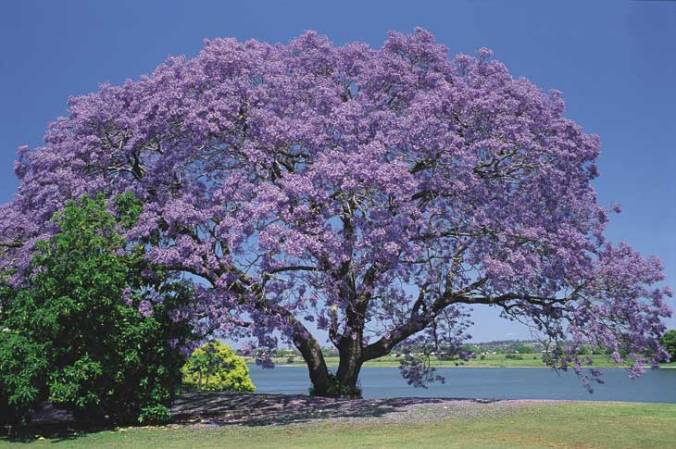
I have told the story many times of how our daughters learnt that the arrival of Advent is heralded by the jacarandas in blossom across their community. All their lives our daughters have known that jacarandas are the signs of hope for the harvest, and for the coming of Christ.
Advent, this season of in-between, this “now-and-not-yet”, this time of waiting. This discomfiting hiatus, where we tell the astonishing journey of Mary, Joseph and the coming of Jesus, while watching and waiting for his return. We are caught in this improbable moment, watching “wars and rumours of wars” and their echoes for millennia, while hoping, despite all this brokenness, that Christ will return and bring wholeness where it is beyond our imagining.
These words of Jesus, carried to us by Luke’s community, are not first heard in a pristine worship space, but by those embedded under the boots of empire. These words of hope are neither naïve nor wishful, but engaged with the promise which all Christ’s disciples hold – that the risen, crucified One will return to reconcile and renew the whole creation.
At this moment, our waiting and our expectation cannot be the acts of spectators, but of participants. We engage in the hope of our assertion, to act in justice and mercy, to reconcile with our neighbours and our enemies, as indications of what God’s completion of all things will mean.
We watch because we hope. We hope because of what we already discovered for ourselves in Jesus Christ; forgiveness is real, mercy transforms us, death is not the final word. The resurrection we proclaim is the context for all our actions, all our hope.
Each of us may well stumble in our waiting, so we turn to those on each side of us, in order that we remember and find courage from each other, because we know the days are difficult.
As with every generation, the reality of this promise can appear entirely out of our reach and beyond our imagining, which is why we turn again to the birth of Jesus. This story, that God would act in such an implausible manner, in such a place, holds all the hope for us – God has broken into the world as an infant, completely at God’s own risk. This act confirms in us the hope we need for the world in which we live.
This promise inherent in Christ’s return is to set us free. Christ is returning to the creation; we raise our heads to witness the glory of God.
Lift your faces to receive Christ’s blessing!

 Through A Strained Fence