The crowd joined in attacking them, and the magistrates had them stripped of their clothing and ordered them to be beaten with rods. After they had given them a severe flogging, they threw them into prison and ordered the jailer to keep them securely. Following these instructions, he put them in the innermost cell and fastened their feet in the stocks. About midnight Paul and Silas were praying and singing hymns to God, and the prisoners were listening to them. [Acts of the Apostles 16.22-25]
A young Warlpiri man, arrested in an Alice Springs supermarket for shoplifting, dies in police custody a few hours later. The authorities “pass on their condolences”.
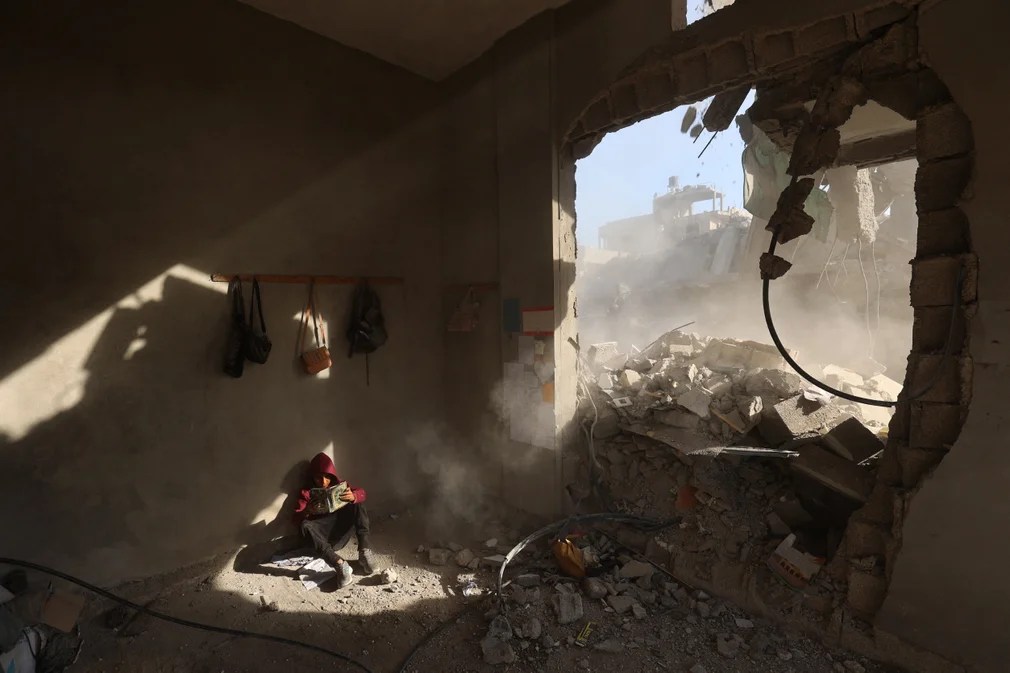
A Palestinian doctor learns that eight of her nine children were murdered by an Israeli airstrike hitting their home. The Israeli Defence Force is “investigating the incident”.
Two Jewish men, Paul and Silas, in Philippi, a Greek city under Roman rule, set a woman free from spiritual – and perhaps physical – slavery. They are arrested, stripped, beaten, shackled and imprisoned.
So, they pray, and sing praises to God.
What faith is this, which sings God’s praise in the darkest cell? What hope is this, which holds when the wounds from our beating are still fresh and our feet are chained?
This has not been an easy week for our Congregation. People we love have died; even as we are thankful for their gifts to us, we grieve their deaths, and our sense of loss. We will care for their families, and for ourselves. Our faith in Jesus, embroidered in our prayers, in our singing and our action, will help us find our way.
I am not sure what capacity for faith the young man’s mother, and grandmother must have in Yuendumu, when the police release his broken body to them. What song might they sing, apart from mourning?
What primal sounds will an Arab mother make at the death of her children? What song, guttural, or ululation, will she raise, if she is able to make any sound at all? I cannot imagine such loss, and the anaesthetising grief with which it is accompanied.
Songs of mourning I begin to comprehend. The communities of Gaza and Yuendumu – amongst many others, now and throughout history – have become accustomed to unjust, sudden death. The “sorry business” journeys of our First Nations communities can sometimes seem almost interminable, as is the generational trauma in which the Palestinians find themselves.
Disciples of Jesus know what it is to sing hope, and praise. When we gather for worship, we remind ourselves of who we are and the One to whom we offer our worship, witness and service.
Do we know what it is to sing defiance and prophecy, to proclaim protest in our song? When Paul and Silas “sang up” the earthquake, foundations were shaken, all chains were broken and prison cells opened wide. Do we imagine they were singing a lullaby to help them sleep? Or were they proclaiming a God who has created the earth, defeated death and saved creation? Is the object of their worship the One who will not be prevented from loving us, who commands us to live justly, to love mercy and to walk humbly, each and every step?
Perhaps we might, instead, sing our songs in parliaments and councils and the streets, and in places where all light and justice appear to have been extinguished. We might sing to politicians and ambassadors that civilians and children are never targets, whatever the infected discourse we bend to our excuses. We might sing of the flawed beauty of each person, their inherent value in the heart of God and, therefore, ours.
We can sing of One who has died, unjustly, and been raised for everyone, even those who cause the brokenness – on every side.
If I sing Christ’s song of hope, perhaps I will find my name within its lyrics – and my life.
 Through A Strained Fence