What, Then, Shall We Say?

Consider your own call, brothers and sisters: not many of you were wise by human standards, not many were powerful, not many were of noble birth. But God chose what is foolish in the world to shame the wise; God chose what is weak in the world to shame the strong; God chose what is low and despised in the world, things that are not, to reduce to nothing things that are,so that no one might boast in the presence of God. [Paul’s First Letter to Corinth 1.26-29]

There was a recent post floating around Instagram, essentially stating that if sermons did not address the misuse of power by the state, then we have betrayed our calling as preachers.

I assume that this reflects what has been happening in the United States over these last months and particularly the recent appalling deaths of citizens in Minnesota.

The social fracturing in the United States is disturbing, not least the state-sponsored violence. It may be tempting to imagine (wrongly) that they are the essential story; however, injustice, corruption and government violence fill many pages of history, including the Scriptures.

At this moment there are several nations where criminality and suffering attend daily life. If we mention the suffering of Gaza, we dare not keep silence about Iran’s citizens, or Sudan; if we speak against the depredations of the Russian state in Ukraine, we must similarly address how the Israeli government’s actions are frequently unchallenged. As Australians, our own original sin remains unreconciled, as our First Nations continue to die in custody, while we avert our eyes to where we feel less implicated.

These are only the most recently written stanzas in our human history; the lament is long, indeed.

The gospel task of the preacher, surely, is to remind each of us of how God speaks hope and life into our world. The second task of the preacher is to remind those who listen of our place within God’s intention, as parables of the reign of God.
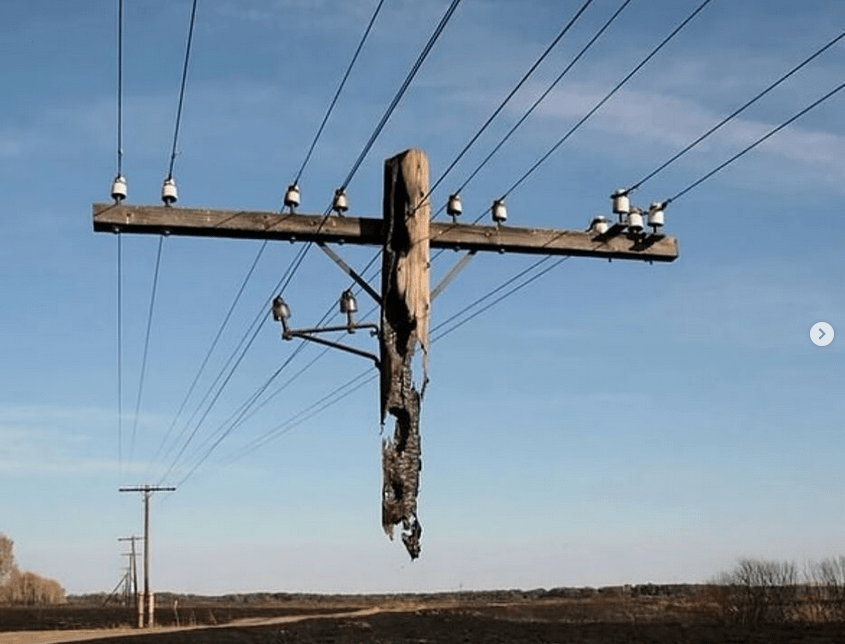
The snare is to believe that the story starts with us – our strength, or our failure which motivate God. Thus, we name the politics, or the persecution first, and place ourselves at the centre. We see the injustices, whether they are personal, or on a grander scale, and shape God’s story to attend to our own.

The readings for this week call us back to the foundations of who we are. The Prophet Micah asks God, on our behalf, what is our responsibility. Justice, mercy and humility are the measures of our faith. A meme for all the ages.

One of Jesus’ earliest sermons identifies those who are truly blessed – those whose lives are marked by spiritual poverty, meekness, justice, mercy, peace-making and their own persecution – and whose blessing are as completely contradictory to our world today as the lives of those to whom Jesus first spoke these words.

So how shall we preach, in the church catholic, where many preachers abdicate discernment and use ChatGPT to thread the needle?

Paul reminds us of our calling. We preach the madness of Christ crucified, the foolishness of a God who suffers and dies, the scandal of a God who becomes weak.

This is the gospel; for all those who are overlooked, who are nameless, or have been told they have no value. It is for those who believe they are the centre of the story, that money, or power, or violence, guarantee them life – ephemeral or eternal.

The measure of the gospel is the measure of our world and of our lives; Christ crucified.

And risen.

The readings for this particular Sunday, the fourth of Epiphany, are Micah 6.1-8, I Corinthians 1.18-31 and Matthew 5.1-12

(Re)Make Up Your Mind

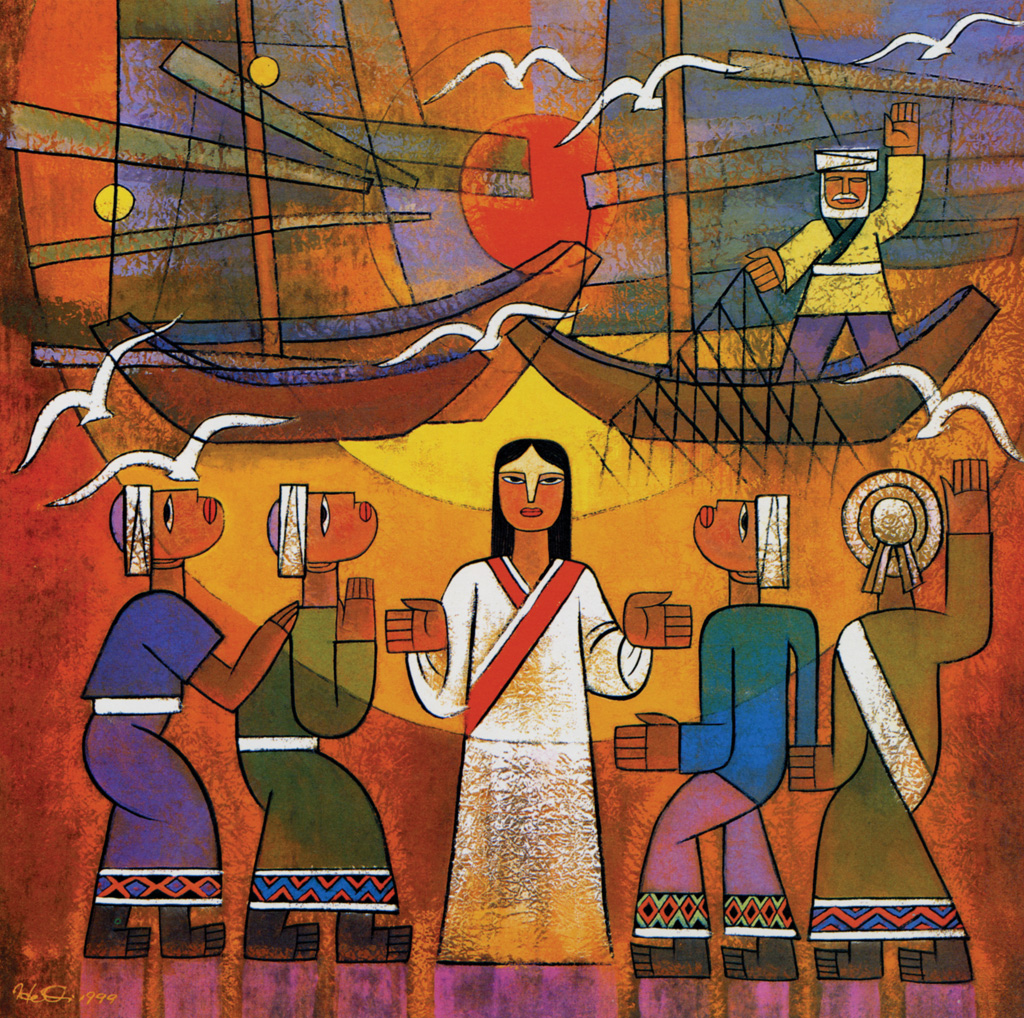
From that time Jesus began to proclaim, “Repent, for the kingdom of heaven has come near.”  As he walked by the Sea of Galilee, he saw two brothers, Simon, who is called Peter, and Andrew his brother, casting a net into the sea – for they were fishermen.And he said to them, “Follow me, and I will make you fish for people.” Immediately they left their nets and followed him. [Matthew’s Gospel 4.17-20]

One of the most quoted (and misquoted) poems in recent times is Yeats’ The Second Coming. Some would see it as prophetic, with a word for our times, as though it arose untainted by context. However, Yeats published it in 1920, in the ashes of the World War, when everything which was unbroken was changed, changed utterly.

Perhaps the words which are consistently accurate since Yeats’ crafting remain “The best lack all conviction, while the worst/Are full of passionate intensity.”

One of the stains on modern social discourse is the apparent inability of people to admit fault, to stand corrected, and to change our minds. Adamantine certainty and polemic are the weapons we carry into our conversations, with no option but victory.

We assert how the world works and what needs to be addressed.  

Thus, poetry like that of Yeats.

Jesus arrives in Galilee and announces that everything is transformed; the reign of heaven is brushing against us. Change your minds!

What we translate here as “repent” has less to do with bad behaviour than it has to do with understanding everything anew. In the midst of our polarising world, God has appeared in Jesus Christ; nothing is what it was. Change your minds.

What you imagined about God, aloof and omnipotent, is turned on its head. What you have proclaimed about our brokenness as human beings, beyond the reach and embrace of God, is tangibly untrue. When we have insisted that all our efforts must be exercised in seeking God, we discover that God insists on seeking us, in Jesus.

Change your minds.

Change your minds, you preachers, you party politicians, you social media polemicists. Change your minds, you who believe we are destined for despair. Change your minds you who believe only people like us can know the hope and heart of the living God.

When Jesus commands us to repent, to be converted, to feel the brush of God’s reign, what will it mean for how we speak and act about those things on which our minds are made up? What about the way we vote, or speak about others? What about Gaza, and Israel? What about those who are different from us? What about reconciliation with our First Nations?

What if we have been mistaken? What if Jesus is inviting us to new life?

Are we courageous enough to repent, and ask God to lead us, or are we simply content to have our biases burnished and our loyalties confirmed?

Two people leave their lives behind to follow Jesus. They bring their weakness and their prejudice, because repentance takes a lifetime. They bring their hope and their obedience. They bring themselves, and a willingness to repent.

God insists on finding us, and bringing us life. Repent, the reign of God is with you!

First Words in Red

The two disciples heard [John] say this, and they followed Jesus. When Jesus turned and saw them following, he said to them, “What are you looking for?” [John’s Gospel 1.37-38]

The poetry and mystery which suffuse the opening of John’s Gospel draw aside the curtains to reveal John the Baptist standing centre stage. John, in turn, bows and steps to one side, as Jesus enters the drama.

John’s hyperbolic introduction appears to be just that, as Jesus’ first words are deceptively simple, yet ask the central question, “What are you looking for?”. When editors elect to highlight the words of Jesus in red, these are the first colour in John’s story.

These are essential elements of any vital conversation; what is it that we value, that we seek, that we believe we need? This question has so much more purpose and hope to it than the abrupt, formulaic model of “witnessing” in which I was originally discipled.

Jesus begins by asking about the other person, by showing interest in them.

In a world which, at the moment, seems particularly “shouty” – with indignation, offence and blinkered opinion – what might happen if we ask the people with whom we are talking (and, hopefully, listening) what matters to them?

What might happen when we ask ourselves the question that Jesus asks us? What are we looking for? If we have the courage to sit with the question and not be content with the hasty answer, what might we discover about ourselves?

The Gospel of John is only beginning. When Jesus asks his essential question of us, he does not leave us there. When these two disciples respond, asking Jesus where he is staying, the next words in red are where Jesus invites them farther up and further in; “Come and see.”