When Mary came where Jesus was and saw him, she knelt at his feet and said to him, “Lord, if you had been here, my brother would not have died.” When Jesus saw her weeping, and the Jews who came with her also weeping, he was greatly disturbed in spirit and deeply moved. He said, “Where have you laid him?” They said to him, “Lord, come and see.” Jesus began to weep. So the Jews said, “See how he loved him!” But some of them said, “Could not he who opened the eyes of the blind man have kept this man from dying?” Then Jesus, again greatly disturbed, came to the tomb. It was a cave, and a stone was lying against it. Jesus said, “Take away the stone.” [John’s Gospel 11.32-38]
We are measuring out our lives in missile strikes. We are becoming accustomed to an appalling situation where war in Ukraine and Gaza are superseded by Venezuela, then Iran, Lebanon and now swathes of Arab nations. The obscene colonisation of language means that “taking someone out” now means execution of an opponent, as opposed to having a meal with a person we like.
Political agitators encourage us to focus on ourselves, to feel aggrieved about the economic burden of fuel (and consequent) prices, while certain individuals, communities and faiths are typecast as terrorists and tyrants, justifying our actions of death as the measure for their sins.
We need to be angry that this is the world we are offered, that we are called to shape our lives around powers and principalities offering death and naming it life, offering slaughter and naming it peace.
This passage concerning Martha, Mary and Lazarus is one of the most revealing about Jesus’ emotional state. The death of his friend and his family’s accompanying grief affect him deeply.
Death is all around; it is not only his friend’s death, but the reality that Jesus’ own ending draws closer. The gospel writer notes that following the Lazarus miracle, the response of community leaders is not celebration, but them plotting to extinguish both Lazarus and Jesus.
Jesus weeps at what has happened and according to the reading is “greatly disturbed.” A more precise translation is “indignation”; it arises from the sound a horse makes when it is unwilling to comply. Jesus expresses this emotion at least twice, we are told; his friend is dead.
Jesus’ grief is not simply profound sadness, it is unwillingness to accept what is before him. “Take away the stone.”.
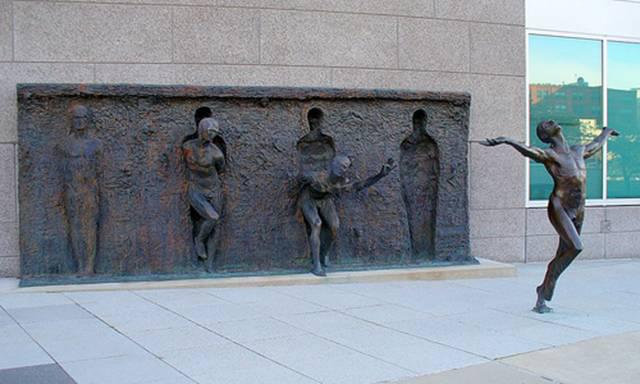
As we draw nearer to the weekend which transforms history, the Lazarus story asserts to us how Jesus understands God’s economy, surrounded by death, yet insisting on life.
We cannot become accustomed to the world where might makes right. The powers that claim authority over life and death, wealth and poverty, faith and other faith must be named – and confronted. The saving of Lazarus, the healing of the blind man, the welcome of the Samaritan woman are not nice, neat gospel stories told to palliate the church, they are the assertion of a God who will not tolerate the powers that isolate and blame, marginalise and condemn.
This is the God of the cross, and the empty tomb.
We are citizens of God’s economy. We will proclaim – and live – the impossibility that death is defeated by resurrection. We will assert that love is offered to all, and mercy is not constrained by politics or geography. Or faith.
We will not be satisfied with the story of death on offer from the world around us. Take away the stone.
 Through A Strained Fence