Aftermath | Siegfried Sassoon

Have you forgotten yet? …
For the world’s events have rumbled on since those gagged days,
Like traffic checked while at the crossing of city-ways:
And the haunted gap in your mind has filled with thoughts that flow
Like clouds in the lit heaven of life; and you’re a man reprieved to go,
Taking your peaceful share of Time, with joy to spare.
But the past is just the same – and War’s a bloody game …
Have you forgotten yet? …
Look down, and swear by the slain of the War that you’ll never forget.

Do you remember the dark months you held the sector at Mametz –
The nights you watched and wired and dug and piled sandbags on parapets?
Do you remember the rats; and the stench
of corpses rotting in front of the front-line trench –
And dawn coming, dirty-white, and chill with a hopeless rain?
Do you ever stop and ask, “Is it all going to happen again?”

Do you remember the hour of din before the attack –
And the anger, the blind compassion that seized and shook you
As you peered at the doomed and haggard faces of your men?
Do you remember the stretcher-cases lurching back
With dying eyes and lolling heads – those ashen-grey
Masks of the lads who once were keen and kind and gay?
Have you forgotten yet? …
Look up, and swear by the green of the spring that you’ll never forge-

Siegfried Sassoon 1886-1967

Truth Getting in the Way

It’s the question every parent has asked their children (some more than once!) and which generations of teachers have asked their generations of students. It’s the hottest topic in politics at the moment, with opinion ranging from the absurd to the neurotic.

It’s the question asked at the darkest moment of Jesus’ life, which many would say is the darkest moment of history. Shackled, and facing his imminent death, Jesus is interrogated by the Roman governor, who asks him, “What is the truth?”

Enlightenment and courage elude Pilate and, through fear and expedience, he sentences Jesus to a flogging, then a criminal’s death, flanked by criminals. This is the truth of power when it is challenged, the truth of every empire throughout history. Monarchs do not like the dissenting voice, and have always sought to extinguish it, by corruption or extinction. The truth which empire claims is that might is right.

And yet, across the world for the last two millennia, followers of Jesus have claimed a different truth, in which they place all their hope.

The story empire tells is that the strong don’t waste their time on the weak, that the first don’t care about the last. The empire’s narrative is rigidly controlled: the mighty don’t sacrifice themselves for those at the bottom of the heap, they are the collateral damage in every system.

Except for one.

On Friday we declare that God gave everything – all God had, including life – for all of creation, all of history, all of us. We all know the brokenness of our world. The gassing of innocents in Syria, the fracturing of relationships amongst people we love and a system which values us by how much we earn, all point to a world in need.

When we believe no one is listening and that no one cares, Jesus dies as a victim, to proclaim that God cares, each and every time someone suffers. God does more than care; when we are in our darkest moment, Jesus’ sacrifice declares that God stands with us.

The story which empire spins is that dead is dead.

The story fashioned by God in love and hope is that love is more than death. Easter is not only the cross, it is the empty grave and Jesus’ community finding new hope when they encounter the Christ, amazingly alive.

The truth which every follower of Jesus, every faith community and every church will celebrate this weekend, is that forgiveness is greater than punishment, that justice is stronger than revenge, that love overpowers hate. Death is not the last word; in Jesus Christ, the first and last word is life.

One Far Fierce Hour

There are pieces of music, like Ravel’s Bolero, which start quietly, sparingly, and build, over what seems an interminable time to the climax, a crescendo of triumph and orchestral power.

Theatre, too, where all the threads are laid separately before the audience, and slowly woven together until the tapestry – of beauty, or disaster – is revealed.

If you read Matthew’s Gospel as a story, from beginning to end, there is a sense of inevitability about this coming week. From the danger shadowing Jesus’ birth and his family’s rush to the safety of Egypt, there is always the impending final confrontation. Since early in Jesus’ ministry, there have been plans to discredit and destroy, and he has not been ignorant of the forces arrayed against him.

So he takes them head on. From an itinerant ministry, moving amongst Jewish towns and Gentile villages, Matthew always seems to place Jerusalem just out of Jesus’ line of sight, even though it has been on his mind for some time. Until now.

From a ministry of encounter with those in need, and those seeking wisdom, Jesus initiates the beginning of the end. It seems a donkey has been arranged, for an arrival during preparations for the Passover festival.

This is street theatre. This is Jesus’ plan to draw attention to himself and to the reign of God. This is Jesus embracing his role as Messiah and declaring it to the crowd, and to the temple, and to the empire that watches in disdain, if it watches at all.

Discipleship is worshiping together, and caring for those around us. It is engaging in our community by serving people in need. It is prayer, singly, or together, as we name with God our concerns for our world. It is generosity and sacrifice which clothes the naked and feeds the hungry and visits the imprisoned. It is meals shared where people are made truly welcome.

And discipleship is confronting the powers which say “there is no forgiveness, no healing, no justice, without our permission”, by offering life and hope when the empire views us with disdain, if it even bothers to look.

Discipleship is turning over the empire’s tables, located deliberately in the temple. It is declaring a new empire where the least and the last are foremost and first, and where loving God and neighbour summarises everything we are asked to do and be.

Is it any wonder this week ends with the cross? To appropriate Chesterton’s poem, this “tattered outlaw” began with his death inevitable and declares an empire where sacrifice is victory, and death is defeated.

One word of advice; do not run ahead. Stay with Jesus, as he convenes his entry to Jerusalem. Wait with him in miracle and disturbance. Watch with him as shadows darken. Risk with him as all appears to end. Grieve in his silence.

Stand with him as God declares all things new.

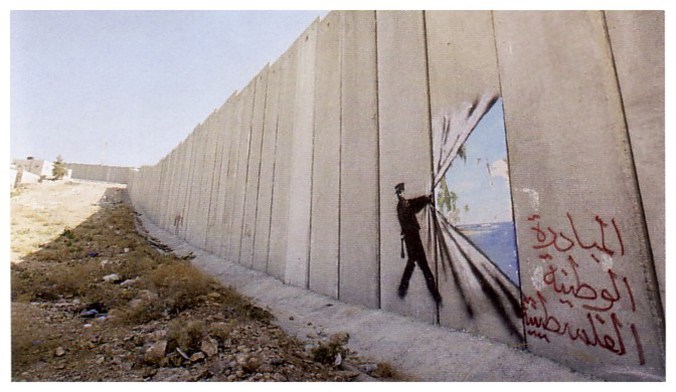
pulling the curtain banksy

Jesus’ Marketing Strategy

Let’s try a change of pace … let’s talk marketing and business. As your eyes glaze, and your finger poises to click to the next page, may I beg your indulgence, just for a moment?

There’s a term I have heard a few times, which I ran through Wikipedia as I was writing this. It’s “creative disruption”, and the gurus describe it as “… a phrase that has been used in the marketing world … to describe the desired break in existing patterns of behaviour of the target audience in response to a highly creative message.”

This is, of course, about advertising, about selling stuff. I want to apply it, briefly, to Jesus’ ministry in John’s Gospel; specifically to the five great narratives which traverse the gospel itself. A Pharisee, Nicodemus, meets Jesus in the dark; a Samaritan woman greets Jesus at midday; a blind man moves from darkness to light; a dead man, Lazarus, moves from death’s darkness to life; and Pilate meets Jesus in history’s darkest hour.

At each event, Jesus disrupts everything we know. People can’t be re-born; outcasts can’t be welcomed; blind people can’t see; dead people don’t come alive; the truth is shaped by Caesar’s hands, and not by an itinerant preacher.

Perhaps the last is most relevant at this moment. We know how the world works; it is shaped by those who have power and money and voice, not by those who have none.

Pilate asks the prisoner Jesus, “What is truth?”

As we watch the machinations of the American empire and the divorce and probable decline of its European and British cousins, we know that truth is ordered by those who have tweets in their hands and obsequious media at their feet. Scientific and historic knowledge are held to ridicule by those who have little, or none, and statements recorded yesterday are denied today. What – where – is truth?

Here we stand, with the itinerant one, numbered with outcasts and criminals. And because we stand here, we assert a truth which disrupts everything – creation and history alike. Death, and blindness, and darkness, and despair are never beyond the healing resolve of God. Our hope in this life, and in the one which awaits us, is that God’s love disrupts it all and creates a truth for which we hunger and thirst.

This creation urges us to live forgiveness, to embody justice, to welcome the stranger and to confront the powerful. It is not true that death is the last word; the truth is found in Jesus Christ, whose word and love returned life to Lazarus.

As long as hatred stifles truth
and freedom is betrayed by fear,
we stand with Christ; give us no peace
till his peace reigns in triumph here.

Roadblock Theology

john 9 powerpointIs it at all surprising to you that a miracle which takes almost three verses of Jesus’ time takes up more than forty verses of consequence in John’s Gospel?

This wonderful, extraordinary event is cluttered with the kind of theology which likes to preen with its own self-importance, but produces little of anything worth admiring.

Occasionally when I am sitting beside someone in their hospital bed, either prior to an operation, or following one, a member of the medical staff may arrive, and begin to talk with others as if the person in the bed is not there.

I have even had conversation directed at me, and not towards the person waiting – usually with apprehension – beside me. The patient has become abstract.

The disciples in the gospel story sound like they are considering this disabled person as a theological curiosity, and not as an opportunity to offer mercy, or grace. Jesus attends with both, and within an earthy, miraculous moment, the man sees for the first time.

All over, it seems, in a matter of minutes.

The poet, Peter Steele, makes the attempt to describe the transformation, as the man opens his eyes entirely for the first time,

to find the day
Open around him, the people strange and tall,
The musing healer up against the wall.

Because this is the heart of the story; not the miracle, but the response.

The newly un-blind man, his parents, his neighbours, the wider community, the clergy are all wrapped into this wonder and not one of them, apart from newly-seeing bloke, says anything positive. Not even a broken Hallelujah.

Instead, there is doubt, confusion, anger, judgement, denial, generally poor theology, and worse, bad humanity.

The miracle is lojohn 9 testst because almost everyone else is.

A man who has gained everything has, by the end of the story, been shut out of the community. As the story closes, he sees even more clearly, and worships Jesus, an act which evades everyone else.

Where do we find ourselves in this story? I am not convinced that John’s community records it only for the miracle. It’s possible that the man became a founding member of John’s community, which is why it so important, but there’s more.

The fear of the parents and the hostility of the Pharisees is as much a part of the story as the mud and spittle and miracle. Is this part of the story echoing us? Is the doubt of the Jews something we know?

Or is the man’s new life one we have also grasped with both our hands, seeing more clearly every day?

And the best theology in the story? When the man formerly known as blind says, “All I know is, a few minutes ago I was blind, and now I can see. If this man were not from God, he could do nothing.”

Here’s mud in your eye!
Born Blind: After Tiepolo | Peter Steele

The hands about his brow and jaw, the smear
Of dirt and spittle pasted on his eyes
Came to him in the darkness: also, fear
That after all the failures, no surprise

Could visit him, no magus usher in
The blessed light of which his mother spoke
As if it had the potency to win
A world that should without it go to smoke.

Obedient, he fumbled to the pool,
Heart in his mouth, and washed the stuff away,
Kneeling in shelter. And began to mewl,
Big-boned as he was, to find the day

Open around him, the people strange and tall,
The musing healer up against the wall.

The Gossip & The Wine

Remembering the Giver

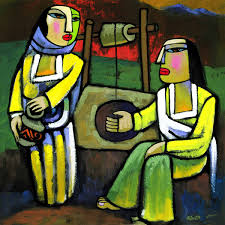
How do you imagine her? When Jesus asks this woman, foreign and unknown to him, for a drink, what do we expect?

If she was cast in a 1940s movie, it is likely Rita Hayworth would be sashaying with her bucket to the well, her auburn hair cascading down her shoulders.  As each decade progresses, we can imagine the stereotypical casting choices for “such a woman as this”.

Why do we assume this of her? The story offered to us is coloured by generations of culture, assuming the worst, or simply the least, of her. We have heard any number of men (and the occasional woman) preach about her weaknesses and failings, neglecting to ask about the plight of any woman in such a patriarchal world.communication-project-manager

Rather, a woman with a scarf across her face and shoulders, defying the midday heat and, probably, the glares of her community, steps cautiously to the village well.

What person, even now, would elect a life with so many fractures? It is possible that her scarf disguised the consequences of such a life, common knowledge – and seed for common gossip – in small rural communities. This is not a life of choice, but one forced upon her, and perhaps her children. I wonder if her last de facto relationship gives her a fraction of freedom to choose, which none of the others – husband, Law, or community – would permit.

The poet, Seamus Heaney, [see the previous post] may be inviting us to consider her as someone even less similar to how she is typically cast:

She came every morning to draw water
Like an old bat staggering up the field …

And at that moment, we are free to brush aside the poet’s image, or discover the courage to consider it.

When she finds the voice to reply to Jesus, is it one of confidence, or is it barely above a whisper, for fear of who might be listening; or that one more man is asking something of her?

Does she glance warily around, as the conversation with Jesus reveals more than she would ever inteSamaritanWomanAtTheWell-HeQind?

Does she discover the depth of Jesus’ mercy, that he offers life to her, with nothing required in return?

Is her fear quenched when, braced for the customary assault, or blame, or barter, she is simply and only offered life?

Jesus gives her everything, when she, perhaps, believes she deserves less than nothing. Perhaps, even worse, this is reinforced for her every day.

Until this day.

What can it mean that Jesus knows everything we have ever done, and still welcomes us as loved?

What does it means that, despite the expectations and demands of everyone, Jesus speaks to us, offering life which fills our emptiness to overflowing?

What a story we have. The unwelcome welcomed. The unloved loved. The outcast gathered in. The broken healed.

A story worth the telling, is it not?

A Drink of Water | Seamus Heaney

She came every morning to draw water
Like an old bat staggering up the field:
The pump’s whooping cough, the bucket’s clatter
And slow diminuendo as it filled,
Announced her. I recall
Her grey apron, the pocked white enamel
Of the brimming bucket, and the treble
Creak of her voice like the pump’s handle.
Nights when a full moon lifted past her gable
It fell back through her window and would lie
Into the water set out on the table.
Where I have dipped to drink again, to be
Faithful to the admonishment of her cup,
Remember the Giver, fading off the lip.

Well Seasoned In Deed

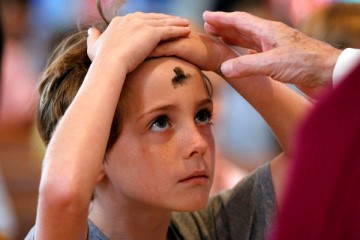
Being marked with ash. Giving up chocolate, or alcohol, or something else you enjoy. Piggy banks. In some traditions, no flowers in church, no songs of praise, no baptisms … what on earth is going on?

For most people, and much of the church, it’s just another week, at the beginning of Autumn. In the tradition of the church we’ve walked into the season of Lent, which comes from an original word lencten, the season of Spring (which is what’s happening in Europe right now).ash-wed-3

So what?

Seasons are part of who we are, especially in rural areas. The burden of Summer’s height is relieved by the arrival of Autumn, and Spring’s arrival heralds the crop ready for harvest.

Most of us just get on with our work and families and gardens and friends, and that’s valuable. But for some of us, it’s a valuable time (forty days with built-in RDOs) to work on our discipleship with Jesus. It’s the discipline of not drinking beer, or eating chocolate for six weeks, and reflecting on what our small sacrifice might mean, especially as we journey towards Easter.

Anyone who says, “why bother?” might want to consider what even small sacrifices entail in a community where so much sits at our fingertips, or within reach of “tap & go”.

What about the idea of no flowers in worship, no songs of celebration?

Let me ask this another way. When are we given permission for seasons of difficulty, challenge, or doubt? If worship is only and always upbeat, where is the opportunity to acknowledge a God who is with us when the chips are down? Where is the liturgy which explores doubt and faith together?

If the worship in which we share fails to reflect the reality of our life’s journey –  or worse, denies it – then what are we saying about faith, about God?

Being marked with ash might seem archaic, but a couple of things come to mind. 30% of people under fifty years of age in Australia have at least one tattoo, so what does a smudge of ash on our forehead, or our hand matter? At the same time, we are claiming something impositionfor ourselves which we can no longer conceal.
A handful of us went to dinner at the pub after the Ash Wednesday Service, marked with the cross. It’s easy to feel self-conscious, even vulnerable, being so obviously and deliberately marked.


When the seasons of our lives have been completed,
when the time comes for the harvest to be gathered in,
may the fruit of our labours, and our living and loving
be pleasing to you, our heavenly Father.

A few of you are still wondering about the piggy banks, aren’t you?

In centuries past, people used clay pots to save money, and during Lent they were used for the money saved as people made their sacrifices. The Latin for clay is pygg. And so, after a linguistic journey of a several hundred years, clay pots, become piggy banks. Something for your local trivia nights …

Simply Awe-Full

When I moved from one of my earlier Congregations, one of the young men gave me a wooden box he had made. It is beautiful and sits in my study, holding letters, cards and photos which are particularly significant. Both the gift from Boothy and its contents are precious, holding memories which are valuable beyond the material.

For me, when difficult days arise, there are strength and comfort in those stories, many of which hold value only to a few, and some, only to me.

I was thinking about the moments in my life when I have experienced wonder, which is more than excitement. There is a tinge – for me – bordering on fear, as well as the awe accompanying the moment.uluru-rain

I remember the two spans of staircase, into the dark, at my grandparents’ home in Sydney. For a five year old it was an unnerving climb past a tall, translucent window, arriving at a hall which I remember being impossibly long and equally dark.

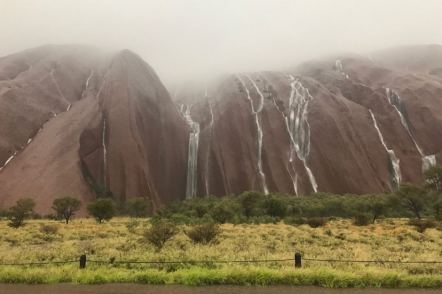
I have stood at Uluru, as rain cascaded down its impervious face, and been whipped by wintry rain at Kata Tjuta, feeling fearful and awe-full altogether.

It was similar to our pilgrimage to, then arrival above, Machu Picchu at sunrise. We tried in vain to comprehend the scope of beauty, crafted by mortal and immortal hands.

I recall lying in the Pattinsons’ front paddock, just shy of midnight, and being drawn, almost hypnotically, into “the wondrous glory of the everlasting stars”.

Despite these scanty sentences, these frail attempts, words are insufficient for the feelings they invoke in me; and Boothy’s wooden box, despite its value, cannot hold them.

What wonder then, in our encounter with the living God? Matthew, Mark and Luke have tried to shape words to articulate the disciples’ wonder, of beholding Jesus’ glory, with characters of old, words from the clouds and light beyond measure.

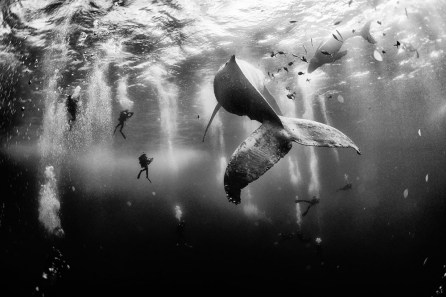
What wonders have287705-r3l8t8d-1000-9d222cfe27a605a1b0cf0036c1667f32 we beheld and find hard to frame, to contain? What blessing of peace, or word of forgiveness, or moment of grace, or anointing of hope have we received? What touch of healing? What voice in our heart, or in our hearing, where God has said yes to us, offering life?

Each of us knows that moment, however distant, even discounted, where we met with the wonder of God. It may simply have been the prayer, or the song, where we knew ourselves loved, more than any verse, sermon or companion could hold.

Each of these is a story worth remembering, and worth the telling. God with us, providing direction for our lives and companionship for the road, even to its ending. And beyond.

Get up, and do not be afraid.