If.

Jesus, full of the Holy Spirit, returned from the Jordan and was led by the Spirit in the wilderness,where for forty days he was tempted by the devil. He ate nothing at all during those days, and when they were over, he was famished. The devil said to him, “If you are the Son of God, command this stone to become a loaf of bread.”  [Luke’s Gospel 4.1-3]

A few short breaths after his baptism by John and anointing by the Holy Spirit, that same Spirit drives Jesus into the wilderness, where he was tempted and famished for six weeks.

Having been announced to the crowd by a heavenly voice as God’s Son, Jesus spends all this time with a wheedling voice whispering cynicism and doubt in his ear. Murmurings about food, bargains about power and the bastardisation of Scripture are in the playbook.

Are you the real thing, Jesus?

The seeds of misgiving and self-doubt are hidden in every phrase; step after misstep, they have taken root in the lives of leaders and servants, of women and men, monarchs and faith communities.

The twisting of call and faithful intent into self-aggrandisement and corruption are stories we have known only too well.

If you are who you say you are. If you are the Son of God …

Jesus has barely been introduced to us; we have seen nothing but the wonder of his birth and baptism. Suddenly we are confronted with this, watching Jesus subjected to the devil’s insinuations.

Are we, perhaps, the ones who need the miraculous signs? Would it help us to know that Jesus actually appears to fulfil his contract? Would it assist us if, at the call of the ringmaster, the Son of God performs his tricks?

The desire for bread and circuses is not solely the province of the Roman Colosseum, but one of the discomforting marks of the crowd in every age. If Jesus would just show us a sign!

At the very crux of Luke’s account is neither a performer, nor a healer, nor a miracle worker, but one who journeys to the cross, suffers and dies. And is raised. The purpose of the Spirit’s anointing is to bring good news, to offer release and vision and liberty to those who need them most desperately.

Jesus is the one for others, not for himself. His authority exists for the restoration of life, not performance art.

Whenever the Church – our community, any congregation – becomes self-absorbed, whether in pride, in cynicism, or fear, we remove our attention from the God who saves and give our worship to the one who cripples and destroys.

Jesus knows where life is found, and leads us there, in word and action;

Jesus answered him, “It is written,
‘Worship the Lord your God,
and serve only him.’ ”

May this season’s journey to the cross and the life beyond bless you and keep you.

A Collect for Lent Sunday | Janet Morley
Spirit of integrity,
you drive us into the desert
to search out the truth of us.
Give us clarity to know what is right,
and courage to reject what is strategic;
that we may abandon the false innocence
of failing to choose at all,
but may follow the purposes of Jesus Christ. Amen

A Sonnet for Ash Wednesday | Malcolm Guite

Receive this cross of ash upon your brow,
Brought from the burning of Palm Sunday’s cross.
The forests of the world are burning now
And you make late repentance for the loss.
But all the trees of God would clap their hands
The very stones themselves would shout and sing
If you could covenant to love these lands
And recognise in Christ their Lord and king.

He sees the slow destruction of those trees,
He weeps to see the ancient places burn,
And still you make what purchases you please,
And still to dust and ashes you return.
But Hope could rise from ashes even now
Beginning with this sign upon your brow.

For Ash Wednesday | Matthew Julius

Gardener, Maker
Only Wise God
who tends the life of the world

You formed us from the dust:
wellspring of life,
beckoner of justice

When we turn from your life-giving way
send us back to dust
to be formed again by your gracious hand

When we disregard creation
send us back to dust
to be rejoined with the wonder of your world

You formed us from the dust:
self-giving sovereign
who whispers mercy into being

When we make of ourselves an idol
send us back to dust
to be filled again with your breath of life

When we disregard the poor
send us back to dust
to be emptied of our selfish indulgence

God of ashes and sackcloth and hope
send us into wild places
to retread your way of liberation

Take us again on the journey of life
that winds its way through deathly valleys

Take us again on the journey of death
that winds its way past tender streams

Gardener, Maker
Only Wise God
and the life of the world

Teach us again the way of your hope
Baptise us again into your fellowship
of loving and serving and suffering and joy

In the name of the beloved One:
Jesus the Anointed,
tender child and pioneer of peace
Amen.

Holding Mystery

While he was saying this, a cloud came and overshadowed them; and they were terrified as they entered the cloud.Then from the cloud came a voice that said, “This is my Son, my Chosen; listen to him!”When the voice had spoken, Jesus was found alone. And they kept silent and in those days told no one any of the things they had seen. [Luke’s Gospel 9.34-36]

What are we able to offer, how might we respond, in the presence of mystery?

We are stepping into the season which leads us to the death of Jesus, to the cross. Jesus’ execution is perhaps the most tangible story we have of Jesus; his humanness, his suffering and death are all entirely on display, and we begin this tragic – and finally hopeful – season with this extraordinary moment.

The story of the transfiguration is something beyond the encounter of almost all of us, and we are asked to hold it in our hands, as we enter this journey. As appalling as crucifixion is, we can understand suffering and death; perhaps, too easily, the wondrous images of cloud and light might slip through our fingers, as they did for Peter and John and James.

The attraction for us is to transfigure (and lessen) the wonder, earthing the splendour into moments of dream, or confusion, or enhanced memories of something far simpler. In our lives of explanation, when mystery is managed, we can move more simply onto the next story, where less is asked of us.

Edwin Muir, in his poem The Transfiguration, speaks of how we might attend to glory, and its implications.  

Our hands made new to handle holy things,
The source of all our seeing rinsed and cleansed
Till earth and light and water entering there
Gave back to us the clear unfallen world.

What if the encounter is more than wonder, but is vital, and not solely for Jesus? What if we require the mystery, in order to comprehend the journey to which Jesus has set his face?

We will talk, purposefully and hopefully, in the weeks ahead, about how Jesus identifies with humanity in suffering and death. We will talk of God’s solidarity with all who are broken, and lament the world’s woundedness, knowing that our hands are not strong enough to hold each injury.   

However, what if this transfiguration asserts and proclaims that we need, each time, to have our vision cleansed, and our hands strengthened to hold what God in Christ might say?

There is no doubt that our discipleship continues in our world where children are bombed and innocents trampled, and we need to bear Christ’s witness here.

Notwithstanding all, we will sing the song of resurrection, as we must, as Easter’s dawn is proclaimed again. We learn how to sing and hope, not from suffering alone, but from attending to the wonder of Christ’s transfiguration.

As we sit with the mystery, in the fragments of a broken world, the restoration of Christ in God is where we find our most complete hope.  

Blessings for this journey!

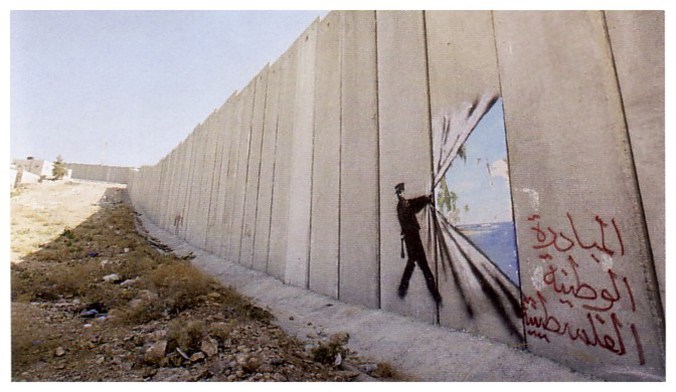
#astrainedfence https://talbragar.net/

The Transfiguration | Edwin Muir

So from the ground we felt that virtue branch
Through all our veins till we were whole, our wrists
As fresh and pure as water from a well,
Our hands made new to handle holy things,
The source of all our seeing rinsed and cleansed
Till earth and light and water entering there
Gave back to us the clear unfallen world.
We would have thrown our clothes away for lightness,
But that even they, though sour and travel stained,
Seemed, like our flesh, made of immortal substance,
And the soiled flax and wool lay light upon us
Like friendly wonders, flower and flock entwined
As in a morning field. Was it a vision?
Or did we see that day the unseeable
One glory of the everlasting world
Perpetually at work, though never seen
Since Eden locked the gate that’s everywhere
And nowhere? Was the change in us alone,
And the enormous earth still left forlorn,
An exile or a prisoner? Yet the world
We saw that day made this unreal, for all
Was in its place. The painted animals
Assembled there in gentle congregations,
Or sought apart their leafy oratories,
Or walked in peace, the wild and tame together,
As if, also for them, the day had come.
The shepherds’ hovels shone, for underneath
The soot we saw the stone clean at the heart
As on the starting-day. The refuse heaps
Were grained with that fine dust that made the world;
For he had said, ‘To the pure all things are pure.’
And when we went into the town, he with us,
The lurkers under doorways, murderers,
With rags tied round their feet for silence, came
Out of themselves to us and were with us,
And those who hide within the labyrinth
Of their own loneliness and greatness came,
And those entangled in their own devices,
The silent and the garrulous liars, all
Stepped out of their dungeons and were free.
Reality or vision, this we have seen.
If it had lasted but another moment
It might have held forever! But the world
Rolled back into its place, and we are here,
And all that radiant kingdom lies forlorn,
As if it had never stirred; no human voice
Is heard among its meadows, but it speaks
To itself alone, alone it flowers and shines
And blossoms for itself while time runs on.

But he will come again, it’s said, though not
Unwanted, unsummoned; for all things,
Beasts of the field, and woods, and rocks, and seas,
And all mankind from end to end of the earth
Will call him with one voice. In our own time,
Some say, or at a time when time is ripe.
Then he will come, Christ the uncrucified,
Christ the discrucified, his death undone,
His agony unmade, his cross dismantled –
Glad to be so – and the tormented wood
Will cure its hurt and grow into a tree
In a green springing corner or young Eden,
And Judas damned take his long journey backward
From darkness into light and be a child
Beside his mother’s knee, and the betrayal
Be quite undone and never more be done.

Radical Citizenry

“But I say to you that listen, Love your enemies, do good to those who hate you,bless those who curse you, pray for those who abuse you.If anyone strikes you on the cheek, offer the other also; and from anyone who takes away your coat do not withhold even your shirt… Do to others as you would have them do to you. [Luke’s Gospel 6.27-31]

There is a voice growing in the life of the Church, which has been almost silent, or perhaps silenced, for some time.

Some of the fault lies with us, as we have sought to regain credibility with the community around us and sought to understand how to live – and speak – the Gospel in a changing world.

We have also been cautious about comparing politicians and other leaders with the miscreants of the past; the argument is already lost when you invoke the tyrants from days gone by. So, we have learnt either to speak in whispers, or not all. As always, some church leaders have simply fallen into line, finding black and white answers appealing, or laying blame at the door of those who are most easily attacked.

The growing voice is evident in the United States, as punishment after punishment falls upon those least able to bear them. Most recently, the Roman Catholic Bishop of El Paso, Mark Seitz, called the treatment of undocumented immigrants a “calumny”, as they can no longer seek sanctuary in hospitals and churches.

People of faith in Australia have acknowledged the increasing anti-Semitic attacks, while, at the same time opposing the violence directed against the Arab and Muslim community. The church has found the capacity to articulate nuanced support for all those in need, not neglecting to challenge the Israeli invasion of Gaza and the West Bank over the last several years, while opposing the political violence of Hamas.

An essential rule is that if someone tells you the answer is simple, be suspicious.

When Jesus offers the Sermon on the Plain, this is not spoken in a churchified bubble, but in the midst of a community under an empire’s heel and the recreant monarchy of Herod. The enemies who strike, hate and curse are most commonly the soldiers of Rome, rather than the person who votes differently, or blames others for the way the world is.

These words of Jesus have as much resonance now as they did two millennia ago, calling us to live in such a way that our community is confronted and, hopefully, blessed. Many of these commands have echoes in other parts of scripture, and other faith communities; there is one, however. which stands out.

“Love your enemies”. How, on earth, is this possible? And yet, Jesus commands the community into this place.

This is not a command to stay with an abusive partner, neither does it ever seek to diminish the suffering some people endure, nor does it see forgiveness as avoiding accountability and justice. People need to be safe.

It does call us – as a community, supporting each other – to so radically understand what it means to be followers of Jesus, that everything turns upside down.

We love our neighbour and our enemy, while offering a voice for those who cannot speak for themselves. We love those who seek to harm us and provide refuge for those who have already been abused. We give to those who take from us, ensuring that food and clothing are already in the hands of those who are hungry for justice and bread.

What will mark us as followers of Jesus? Falling into line with community and government, or offering mercy and love to those who may never love us back?

An Odd Blessing

Then Jesus looked up at his disciples and said:
“Blessed are you who are poor,
for yours is the kingdom of God.
“Blessed are you who are hungry now,
for you will be filled.
“Blessed are you who weep now,
for you will laugh.
“Blessed are you when people hate you,
and when they exclude you, revile you, and defame you
on account of the Son of Man.          [Luke’s Gospel 6.20-23]

Imagine if these were the words which we heard from community leaders and politicians. What would it be like to attend a presentation when the speaker addressed our deep concerns?

When Jesus speaks these words, often referred to as the “Sermon on the Plain”, people had gathered from all around the region to hear him speak and to find hope through healing and encouragement.

Jesus’ words of blessing are balanced with words of warning those who believe they have found all the answers now; “Woe to you who are rich, who are full, who laugh now, and have all people speak well of you …”

This is not a list of vengeance, but a reminder that there are always those around us who need our encouragement, our laughter, our resources. When our focus is self-centred, addressing only our own comfort, be warned.

This sermon on the plain continues, talking about loving enemies, forgiving others and far more besides. This is the heart of the sermon, the heartbeat of our calling. The radical nature of faith is not identifying any particular issue – domestic abuse, gender identity, First Nations justice.

It is discerning that each time we are acting out of our faith to serve those who are our neighbours, loving those we are yet to meet and, most significant of all, to forgive those who have no intention of loving us, then we realise the community into which Christ calls each of us. This is the journey.

The words of Jesus’ blessing are the beginning of the sermon; they are extraordinary, but do not leave them there. We act from the mercy and blessing offered to us in Christ.

Right now, everywhere we look there are speakers – online, in print, on our screens – telling us that being outraged is the only way to be. Soulless promises are made that have no soil in which to grow, and that is almost certainly a good thing. People are in need, but vengeance and resentment lead us nowhere.

“In fact, violence merely increases hate … Returning violence for violence multiplies violence, adding deeper darkness to a night already devoid of stars. Darkness cannot drive out darkness; only light can do that. Hate cannot drive out hate; only love can do that.”  [M.L. King Jr.]

Jesus offers these blessings because he knows the world; the voice of corruption, the heel of Empire, the struggle of the faith community in the face of such challenges.

The journey to which he calls will not cease until all is complete, but we are invited to act because we know each time we are acting out of hope and articulating the only story offering life.

Measuring Justice

Then Jesus said to Simon, “Do not be afraid; from now on you will be catching people.”  When they had brought their boats to shore, they left everything and followed him.  [Luke’s Gospel 5.10-11]

The disciples’ nets are empty, having worked fruitlessly all night.  

The images on our screens this week of Palestinian desolation in Gaza are arresting, leading to despair. Where does one start to rebuild? More critically, where do you find your home, your street, your neighbourhood?

The glib suggestion about removing the Palestinians altogether and creating a beach resort was the remark from someone not understanding, or ignoring, profound pain – the immeasurable agony of loss of friends and family, of home, community and future.

Please don’t suggest that this issue is patently more complex than my brief preceding paragraphs; the simpleminded political solution offered is where this week’s problem begins. The cruel irony of proposing that the Gazans might be removed by train to somewhere else ridicules not just their history and sense of place, but the obscene anniversary the world has just acknowledged about the liberation and closure of Auschwitz-Birkenau.

We cannot worship this week – any week – without attending to the world in which we live. We cannot speak of hope without asking what does hope look like for people fearful of the next hour, or the next day.

I have been reading enough recently to be confident that there are pieces of hope the size of mustard seeds being sown in Palestine and Israel. They are sown not by the hands of missionaries from abroad, but by locals – Israeli and Palestinian, Jewish and Muslim and Christian and none – who have lost much, and refuse to succumb to despair.

Even if I had wisdom which I was arrogant enough to offer, more than seven decades of pain will not be addressed, resolved and healed by more punishment and vengeance. We cannot permit this week – and the years before and the stories to come – to pass unacknowledged.

We must pray for, and speak of, and embody, justice.

The Gospel reading this week addresses the way people feel when they encounter Jesus. Jesus’ new disciples are confronted with their mortality and their frailty; they come with nothing and discover the fear and wonder of hope at Jesus’ hands.

The word which I found arresting this week is when Jesus invited them to follow him, leaving their impossibly full nets – and everything else – behind. Jesus called them to be “catching people, alive”, a word in deliberate contrast with their trade.

As we watch the cataclysm in Gaza being removed stone by stone, and slowly restored; as we grieve over the birthplace of Jesus being scarred consistently by war; what does it mean for us to serve and attend to people, especially those in need, to offer them safety? What does it mean when salvation is not just an idea, but the offering of wholeness itself – here in and the life to come?

An Inconvenient Love

Love is patient; love is kind; love is not envious or boastful or arrogant or rude. It does not insist on its own way; it is not irritable or resentful;it does not rejoice in wrongdoing, but rejoices in the truth.It bears all things, believes all things, hopes all things, endures all things. Love never ends.  [I Corinthians 13.4-8a]

This wonderful reading has often been hamstrung by the context of the marriage ceremony. People gather, their hearts excited about the love about to be promised between two people, and the larger (uncomfortable?) story to which Paul is attesting, slips by, unnoticed.

Last week’s reading, from the previous chapter in Corinthians, identifies the diverse gifts which are ideally present in the community of faith. Not simply about prophecy and teaching, speaking in tongues and miracles, but about the frailty and strength of different people at different times in the life of our community.

Paul articulates the challenge of living in community, one of which is that there are some people who are up front, leading us on and there are others who require greater care.

“On the contrary, the members of the body that seem to be weaker are indispensable,and those members of the body that we think less honourable we clothe with greater honour, and our less respectable members are treated with greater respect …” [I Cor. 12.22-23]

This is not the way our wider community currently appears to function. We have community members, commentators and politicians calling for punishment towards those “who do not fit”.

The church slides easily into this trap; we are uncomfortable with people who don’t believe what we believe, or behave the way we’d like them to. We have a “church mission plan”, and we are intolerant of waiting for people to catch up.

Which is precisely why Paul has written this chapter of love immediately following the chapter on membership and gifts. This is not about the heart beating faster as we make our wedding vows, this is about the behaviour of the church as we love each other and our wider community.

This is the foundation for all our actions in our Congregation, and the guidelines by which we make decisions. We start, not with expediency, but asking how we serve each other and those who are most in need, who live their lives in the margins of our Congregation, or our community.

This sounds too much, I know. Paul also knows this.

That’s why this is discipleship, not arrival. We can see “in a mirror, dimly” as we find our way. We are asked for faithfulness, hope and love, and that is our GPS. And from these gifts, all the others arise, and are more a reflection of Christ.

Let us continue to pray for our Congregation, that we will continue to grow, to seek forgiveness from each other, to serve those in greatest need of service, and to love each person, as Christ loves them – and us!

The Past | Oodgeroo Noonuccal

Let no one say the past is dead.
The past is all about us and within.
Haunted by tribal memories, I know
This little now, this accidental present
Is not the all of me, whose long making
Is so much of the past.

Tonight here in suburbia as I sit
In easy chair before electric heater,
Warmed by the red glow, I fall into dream:
I am away
At the camp fire in the bush, among
My own people, sitting on the ground,
No walls around me,
The stars over me,
The tall surrounding trees that stir in the wind
Making their own music,
Soft cries of the night coming to us, there
Where we are one with all old Nature’s lives
Known and unknown,
In scenes where we belong but have now forsaken.
Deep chair and electric radiator
Are but since yesterday,
But a thousand camp fires in the forest
Are in my blood.
Let none tell me the past is wholly gone.
Now is so small a part of time, so small a part
Of all the race years that have moulded me.