Born Blind: After Tiepolo | Peter Steele

The hands about his brow and jaw, the smear
Of dirt and spittle pasted on his eyes
Came to him in the darkness: also, fear
That after all the failures, no surprise

Could visit him, no magus usher in
The blessed light of which his mother spoke
As if it had the potency to win
A world that should without it go to smoke.

Obedient, he fumbled to the pool,
Heart in his mouth, and washed the stuff away,
Kneeling in shelter. And began to mewl,
Big-boned as he was, to find the day

Open around him, the people strange and tall,
The musing healer up against the wall.

The Gossip & The Wine

Remembering the Giver

How do you imagine her? When Jesus asks this woman, foreign and unknown to him, for a drink, what do we expect?

If she was cast in a 1940s movie, it is likely Rita Hayworth would be sashaying with her bucket to the well, her auburn hair cascading down her shoulders.  As each decade progresses, we can imagine the stereotypical casting choices for “such a woman as this”.

Why do we assume this of her? The story offered to us is coloured by generations of culture, assuming the worst, or simply the least, of her. We have heard any number of men (and the occasional woman) preach about her weaknesses and failings, neglecting to ask about the plight of any woman in such a patriarchal world.communication-project-manager

Rather, a woman with a scarf across her face and shoulders, defying the midday heat and, probably, the glares of her community, steps cautiously to the village well.

What person, even now, would elect a life with so many fractures? It is possible that her scarf disguised the consequences of such a life, common knowledge – and seed for common gossip – in small rural communities. This is not a life of choice, but one forced upon her, and perhaps her children. I wonder if her last de facto relationship gives her a fraction of freedom to choose, which none of the others – husband, Law, or community – would permit.

The poet, Seamus Heaney, [see the previous post] may be inviting us to consider her as someone even less similar to how she is typically cast:

She came every morning to draw water
Like an old bat staggering up the field …

And at that moment, we are free to brush aside the poet’s image, or discover the courage to consider it.

When she finds the voice to reply to Jesus, is it one of confidence, or is it barely above a whisper, for fear of who might be listening; or that one more man is asking something of her?

Does she glance warily around, as the conversation with Jesus reveals more than she would ever inteSamaritanWomanAtTheWell-HeQind?
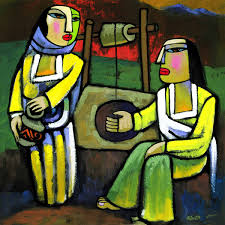
Does she discover the depth of Jesus’ mercy, that he offers life to her, with nothing required in return?

Is her fear quenched when, braced for the customary assault, or blame, or barter, she is simply and only offered life?

Jesus gives her everything, when she, perhaps, believes she deserves less than nothing. Perhaps, even worse, this is reinforced for her every day.

Until this day.

What can it mean that Jesus knows everything we have ever done, and still welcomes us as loved?

What does it means that, despite the expectations and demands of everyone, Jesus speaks to us, offering life which fills our emptiness to overflowing?

What a story we have. The unwelcome welcomed. The unloved loved. The outcast gathered in. The broken healed.

A story worth the telling, is it not?

A Drink of Water | Seamus Heaney

She came every morning to draw water
Like an old bat staggering up the field:
The pump’s whooping cough, the bucket’s clatter
And slow diminuendo as it filled,
Announced her. I recall
Her grey apron, the pocked white enamel
Of the brimming bucket, and the treble
Creak of her voice like the pump’s handle.
Nights when a full moon lifted past her gable
It fell back through her window and would lie
Into the water set out on the table.
Where I have dipped to drink again, to be
Faithful to the admonishment of her cup,
Remember the Giver, fading off the lip.

Well Seasoned In Deed

Being marked with ash. Giving up chocolate, or alcohol, or something else you enjoy. Piggy banks. In some traditions, no flowers in church, no songs of praise, no baptisms … what on earth is going on?

For most people, and much of the church, it’s just another week, at the beginning of Autumn. In the tradition of the church we’ve walked into the season of Lent, which comes from an original word lencten, the season of Spring (which is what’s happening in Europe right now).ash-wed-3

So what?

Seasons are part of who we are, especially in rural areas. The burden of Summer’s height is relieved by the arrival of Autumn, and Spring’s arrival heralds the crop ready for harvest.

Most of us just get on with our work and families and gardens and friends, and that’s valuable. But for some of us, it’s a valuable time (forty days with built-in RDOs) to work on our discipleship with Jesus. It’s the discipline of not drinking beer, or eating chocolate for six weeks, and reflecting on what our small sacrifice might mean, especially as we journey towards Easter.

Anyone who says, “why bother?” might want to consider what even small sacrifices entail in a community where so much sits at our fingertips, or within reach of “tap & go”.

What about the idea of no flowers in worship, no songs of celebration?

Let me ask this another way. When are we given permission for seasons of difficulty, challenge, or doubt? If worship is only and always upbeat, where is the opportunity to acknowledge a God who is with us when the chips are down? Where is the liturgy which explores doubt and faith together?

If the worship in which we share fails to reflect the reality of our life’s journey –  or worse, denies it – then what are we saying about faith, about God?

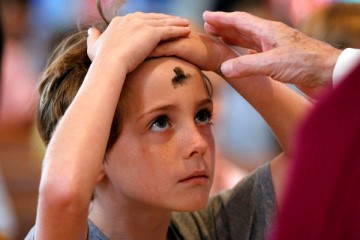
Being marked with ash might seem archaic, but a couple of things come to mind. 30% of people under fifty years of age in Australia have at least one tattoo, so what does a smudge of ash on our forehead, or our hand matter? At the same time, we are claiming something impositionfor ourselves which we can no longer conceal.

A handful of us went to dinner at the pub after the Ash Wednesday Service, marked with the cross. It’s easy to feel self-conscious, even vulnerable, being so obviously and deliberately marked.


When the seasons of our lives have been completed,
when the time comes for the harvest to be gathered in,
may the fruit of our labours, and our living and loving
be pleasing to you, our heavenly Father.

A few of you are still wondering about the piggy banks, aren’t you?

In centuries past, people used clay pots to save money, and during Lent they were used for the money saved as people made their sacrifices. The Latin for clay is pygg. And so, after a linguistic journey of a several hundred years, clay pots, become piggy banks. Something for your local trivia nights …

Simply Awe-Full

When I moved from one of my earlier Congregations, one of the young men gave me a wooden box he had made. It is beautiful and sits in my study, holding letters, cards and photos which are particularly significant. Both the gift from Boothy and its contents are precious, holding memories which are valuable beyond the material.

For me, when difficult days arise, there are strength and comfort in those stories, many of which hold value only to a few, and some, only to me.

I was thinking about the moments in my life when I have experienced wonder, which is more than excitement. There is a tinge – for me – bordering on fear, as well as the awe accompanying the moment.uluru-rain

I remember the two spans of staircase, into the dark, at my grandparents’ home in Sydney. For a five year old it was an unnerving climb past a tall, translucent window, arriving at a hall which I remember being impossibly long and equally dark.

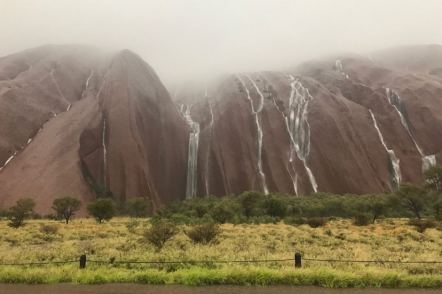
I have stood at Uluru, as rain cascaded down its impervious face, and been whipped by wintry rain at Kata Tjuta, feeling fearful and awe-full altogether.

It was similar to our pilgrimage to, then arrival above, Machu Picchu at sunrise. We tried in vain to comprehend the scope of beauty, crafted by mortal and immortal hands.

I recall lying in the Pattinsons’ front paddock, just shy of midnight, and being drawn, almost hypnotically, into “the wondrous glory of the everlasting stars”.

Despite these scanty sentences, these frail attempts, words are insufficient for the feelings they invoke in me; and Boothy’s wooden box, despite its value, cannot hold them.

What wonder then, in our encounter with the living God? Matthew, Mark and Luke have tried to shape words to articulate the disciples’ wonder, of beholding Jesus’ glory, with characters of old, words from the clouds and light beyond measure.

What wonders have287705-r3l8t8d-1000-9d222cfe27a605a1b0cf0036c1667f32 we beheld and find hard to frame, to contain? What blessing of peace, or word of forgiveness, or moment of grace, or anointing of hope have we received? What touch of healing? What voice in our heart, or in our hearing, where God has said yes to us, offering life?
Each of us knows that moment, however distant, even discounted, where we met with the wonder of God. It may simply have been the prayer, or the song, where we knew ourselves loved, more than any verse, sermon or companion could hold.

Each of these is a story worth remembering, and worth the telling. God with us, providing direction for our lives and companionship for the road, even to its ending. And beyond.

Get up, and do not be afraid.

A Life Less Ordinary

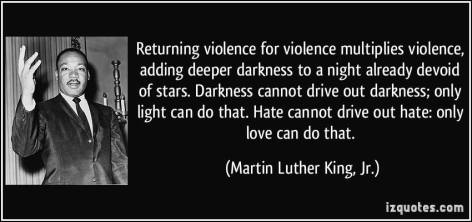
Returning violence for violence multiplies violence, adding deeper darkness to a night already devoid of stars. Darkness cannot drive out darkness; only light can do that. Hate cannot drive out hate; only love can do that.

Perhaps that is how Jesus might have phrased part of his Sermon on the Mount, if he was an African American in the sixties in the United States of America.

“An eye for an eye will leave the whole world blind”, is a phrase attributed to Ghandi and certainly seems to comply with his understanding, both of violence and of the world.

mlk-darknessBoth these men acted within communities and circumstances of violence, as Ghandi sought to establish freedom from the yoke of foreign empire and Dr King sought freedom from the injustice of the empire into which he was born.
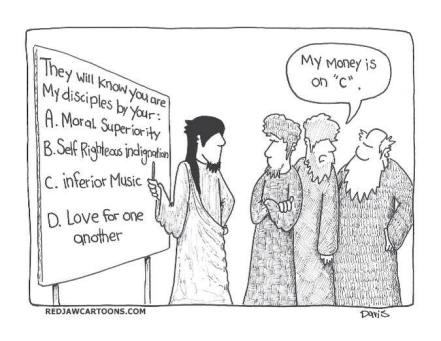
When they speak, much of what they say resonates with the words of Jesus, as he implores and challenges his followers to lives which are more. The resonance is not simply the radical wisdom they each offer, but the context in which they offer it. The violence of empire taints the lives of King and Ghandi, and colours the context for every word and action of Jesus.

Retaliation is one thing when you are talking to your children about how to play together, but another when a soldier beats your child for being in their path. The marks of a broken community under the empire’s fist are everywhere: corrupt tax officials taking the jacket off your back and Roman soldiers conscripting your back to carry their goods. Beggars abound, forced by poverty into brazenness and despair.

Jesus calls them, and now us, to more. Walk further with the pack; offer your shirt; be generous, even when it’s hard.

And, by the way, love your enemies and pray for them. Jesus calls us to be extraordinary, because being ordinary means that we end up blind and toothless. Jesus asks us to be perfect, in love and in service, but that is simply too much to ask, is it not?

This is, however, our call. We know the consequences of walking the accepted path – darkness awaits. So we will choose light, the light found in Jesus, who turned his cheek to the violence and lost his clothes to the soldiers and carried his cross as far as he could and loved his enemies at every step – priests and Pilate and Herod and executioners.

Jesus (and King and Ghandi) hasn’t crafted some maxims with which to inspire contemplation and mindfulness. This is about living an alternative life, as citizens in a God’s empire of justice and hope.  We will travel this journey together, with Jesus’ light, with the Spirit’s song within us, and with each other for company and grace.

The Second Coming | W.B. Yeats

Turning and turning in the widening gyre
The falcon cannot hear the falconer;
Things fall apart; the centre cannot hold;
Mere anarchy is loosed upon the world,
The blood-dimmed tide is loosed, and everywhere
The ceremony of innocence is drowned;
The best lack all conviction, while the worst
Are full of passionate intensity.

Surely some revelation is at hand;
Surely the Second Coming is at hand.
The Second Coming! Hardly are those words out
When a vast image out of Spiritus Mundi
Troubles my sight: somewhere in sands of the desert
A shape with lion body and the head of a man,
A gaze blank and pitiless as the sun,
Is moving its slow thighs, while all about it
Reel shadows of the indignant desert birds.
The darkness drops again; but now I know
That twenty centuries of stony sleep
Were vexed to nightmare by a rocking cradle,
And what rough beast, its hour come round at last,
Slouches towards Bethlehem to be born?

Above & Beyond

I had a rugby coach at school who was fond of saying, “Practice doesn’t make perfect; perfect practice makes perfect.”

He was the kind of coach who asked more of us, in training and on the paddock. It was not sufficient to say we had done passing drills, or tackling practice; had we done it correctly? Were we better as a result? When we played on the weekend, would we be able to replicate what we had trained?

Perhaps the key to his coaching – for all of us schoolkids – was that he had played for the Wallabies, so it was more than theory. He had seen this stuff work.rugby-or-soccer

Many of us remember the teacher, the parent, the mentor, who asked (even demanded) more of us, whether it was at Girl Guides, or in our home, or learning the clarinet. It was often difficult, sometimes unpleasant, but when we found our courage and our way, we saw where we were being encouraged to go.

Our coach required more of us because he saw more in us.

The wonder of Jesus’ Sermon on the Mount begins to fade when Jesus moves from blessing to rigour. Almost everyone we know remembers one, or more, of the blessings, but how many of us willingly remember – and recite – about calling people fools, or the self-imposed discipline of a promise made?

I can honestly say that I have never murdered anyone, and I would expect most of my friends can say the same. But anger and insult? More than that, how often have I deliberately put aside the things which “needed to be done” and found my way back to someone to ask their forgiveness and be reconciled?

My bible’s editors placed a series of headings in this part of Jesus’ sermon, “concerning anger”, “concerning adultery”, “concerning divorce”, as if this is about a series of structured laws, rather than the integrity of our character and the promises we make. Most relationships are wonderful, difficult, fulfilling, awkward and occasionally, boring. How we live together as friends, family, partners and spouses is more than a series of behaviours; it’s our ability to care, serve and forgive – and ask forgiveness – which is the measure of who we are together.

Jesus invites all of his disciples, throughout history, to more. It’s not simply about the power (failure) of a man to cast aside his wife when his gaze is drawn elsewhere, it’s about remembering the coven10488240_10152577377875826_5720551856795683634_nant made of love and commitment – and reconciliation. Much of Jesus’ language in this small section is focused upon men, but we can draw a wider net in which to gather all of us.

It is insufficient to say blandly, “According to the Law, I have not sinned”. Jesus’ fulfilment of that Law calls us to more; to living creatively, to honouring our covenants, to restoring and renewing relationships, to a perfect practice.

This is hard, it requires discipline. We need each other. And we need the hope of God’s promise, the grace of Jesus’ example and the Spirit’s company for each step.

Adding Flavour

It seems like he’s everywhere. When the radio – any station – comes on, or when you flick past any number of websites, or when you don’t move fast enough to change the channel as the news commentary appears on the television.

Donald Trump is ubiquitous.

I have a confident suspicion that he loves it like that, even when the commentary is critical, or the images are poor. “There is only one thing worse than being talked about and that is not being talked about,” Oscar Wilde archly reminds us.

I’m already tired, because it isn’t only since the inauguration, it was the eighteen months beforehand of campaign and criticism and commentary and cheer squads. Mr Trump is on our news more than our news is.

In case you missed it (ironic smile), Christians across the full spectrum of the church have been offering opinions about all aspects of the new President, arguing to and fro, creating a lot of heat and not a lot of light.

As disciples, it’s appropriate to have our judgments informed by our faith in Jesus and to act accordingly. We are, however, called to more than 11069403_1072162782810946_9033090132088524593_ncommentary.

After blessings of last week, for the broken and the heralds in the kingdom of God, Jesus’ calls each of us to more. I have an opinion about many issues in the world, and it’s possible a few of them are even worth considering, but my discipleship asks me how I will act to bring the flavour of God into people’s lives and the light of God’s hope into people’s darkness.

What does the salt and light taste and look like? Jesus spells it out, so that we are without excuse. What can I do, or say, that will help people look towards the God who loves and forgives?

What might I offer someone when they are spewing hatred on the internet, or in the street, which casts hope into the violence in their heart?

What can I say in a conservation which makes peace – creating justice, finding hope, discovering a way forward? When I consider Jesus, I find creative responses to the issues of our lives: live rightly; be reconciled to those around you; value people as more than objects; consider the integrity of the promises you make; r11698607_1118050854890984_8822747988615383105_nestore, endure, embrace. Love.

It’s much easier to type a (clever/witty/acerbic/destructive) response on a Facebook thread than to love your enemy, or to have integrity in your own life. We can be clever and cynical at a barbecue about how badly the world is going.

We are not called to commentary, we’re called to follow Jesus. To whom can you offer forgiveness, or from whom can you seek it? Which enemy might you endure, or even welcome? What stranger might you embrace?

In the face of our fearful, violent age, what hope might we offer in the way we live? We live this way, not despite the world, but because of Jesus.

Taking Notice

I have a deep appreciation of art works where there’s a character at the edge of the picture, or partially obscured by shadow. It’s the character at whom the artist hints, who catches our eye if we look the right way.

I first noticed him (her?) In Rembrandt’s Return of the Prodigal Son, in the left side, towards the back. Some have argued that Rembrandt placed himself in the work, but only just. Others have said it can be each of us, and still others believe we’re overthinking it, and it’s simply one of the witnesses not mentioned in Jesus’ parable. I’m not so sure. Some prints have the character so vaguely defined she barely exists at all.rembrandt-prodigal

I have an image of The Last Supper, by Sieger Köder, opposite me as I write, with a shadowed, shadowy figure, heading for the door as Jesus blesses the wine bearing his own reflection and breaks the bread. Is it Judas? Is it me?

These sorts of unnamed, un-faced characters are deliberately remembered in the gospel, as both Jesus and Paul remind us.

The poor in spirit, the meek, those who weep, the peacemakers, the pure in heart, the merciful, those who seek justice and those who are persecuted and slandered are not only included in the story of Jesus, they are blessed.

Those our community ignores, or discards as inconvenient or troublemakers are blessed!

Those we decry as nothing are everything in the eyes of God.

Paul, rejoicing in the paradox of the cross, amplifies it for us. Wealth, power, wisdom and inheritance are as nothing to the foolishness of God in Jesus.

God chose what is low and despised in the world, things that are not, to reduce to nothing things that are, so that no one might boast in the presence of God.

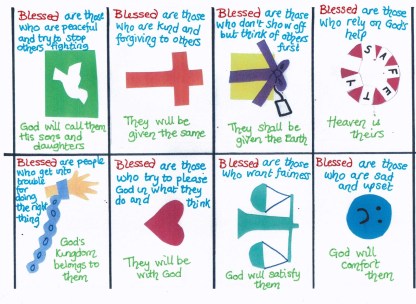
The “things that are not” are chosen by God. Perhaps Paul’s poetic best? No, this is Paul’s prophetic best, as we discover that those who are told by family, or partner, or parent, or culture, or teacher, or church, that they are nothing, are in fact worthy of God’s everything.beattitudes-cards

Despite our best attempts to ignore them, or paint them out of the picture entirely, in Jesus the unnamed discover  their names, the lost are found.

Our inherent struggle is that the Beatitudes are amongst the most quoted of all Jesus’ words and we live in world which consistently seeks to belie them.

No wonder Paul calls the plan of God madness and a scandal – everything we believe and are told is turned upside down when we name the Crucified One as Lord of history.

We always have a place, and welcome others in our turn. And not just a place, a blessing and a name. Perhaps this wonder is the most profound, God doesn’t just permit, or tolerate our presence, God rejoices and bestows blessing – the ones who are least are already the first in the reign of God.