Your cry a provocation, a call
To prayer; all day you wail our troubles.
Prophet of the suburbs, you declaim,
As summer midwifes the earth’s second
Birth each year: suffer my child to come
And be your own. So it goes with love
Both sacred and profane: a borrowed
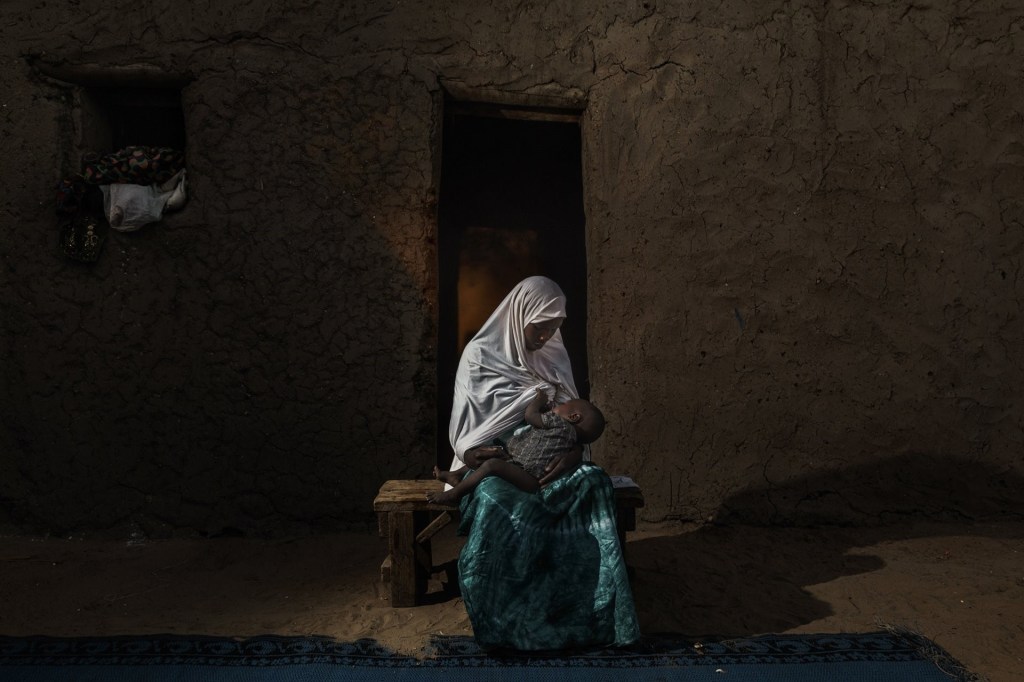
Cot, a sacrifice, an act of faith.
And may we so raise each other up.
Uncategorized
Change Which Creates
And the crowds asked him, “What then should we do?”In reply he said to them, “Whoever has two coats must share with anyone who has none; and whoever has food must do likewise.” Even tax collectors came to be baptized, and they asked him, “Teacher, what should we do?”He said to them, “Collect no more than the amount prescribed for you.”Soldiers also asked him, “And we, what should we do?” He said to them, “Do not extort money from anyone by threats or false accusation, and be satisfied with your wages.” [Luke’s Gospel 3.10-14]
So, what should we do?
This is the question for which all proclamation yearns, the inquiry for which preachers wait. This is the response to what has just been spoken, with the hope that it has been heard and inwardly digested.
John the Baptizer has confronted the community and urged them towards change. The failed image of repentance is a person, sitting sorrowfully in a corner. This is not what John is calling for. There is no place for huddled remorse, but an active response to failure, to injustice, to harm.
So, the question comes, three times, to John; what should do we do now? Individuals from the crowd, moneychangers and soldiers all ask, publicly, what they can do.

And John reminds them – and us – that repentance is creative, not simply responsive. Once you realise what’s happening, change how you live; don’t stop living, live differently!
The critical change is not simply avoiding destructive behaviour, good as that might be, it is about creating hope and life where you are.
Use your life, your resources, to create life for others. What you have in your wardrobe and your kitchen, your wallet, your job and your life can provide hope when none is visible.
Neither is it about the “grand gesture”, because that’s usually a gesture manufactured for avoidance. We plan, and consider and try to change the world, when all that is asked is about the relationship at our front step.
What is the creative act you can offer in this relationship – of thirty years, or thirty minutes – that can engender hope, build worth, encourage resilience? You are citizens of a new economy, says John, where worth and esteem are valued by service and generosity and justice.
You might consciously ask yourself, in which direction will I turn to create that today, for the next person I meet, and for the person sitting last in the queues for bread, or justice? We are citizens of a new community, proclaimed by John, and shaped by Christ’s very person.
Before Jesus | Alla Bozarth
Before Jesus
was his mother.
Before supper
in the upper room,
breakfast in the barn.
Before the Passover Feast,
a feeding trough.
And here, the altar
of Earth, fair linens
of hay and seed.
Before his cry,
her cry.
Before his sweat
of blood,
her bleeding
and tears.
Before his offering,
hers.
Before the breaking
of bread and death,
the breaking of her
body in birth.
Before the offering
of the cup,
the offering of her
breast.
Before his blood,
her blood.
And by her body and blood
alone, his body and blood
and whole human being.
The wise ones knelt
to hear the woman’s word
in wonder.
Holding up her sacred child,
her spark of God in the form of a babe,
she said:
“Receive and let
your hearts be healed
and your lives be filled
with love, for
This is my body,
This is my blood.”
From Accidental Wisdom by Alla Renée Bozarth, Universe 2003
and This is My Body~ Praying for Earth, Prayers from the Heart by Alla Renée Bozarth, Universe 2004.
All rights reserved.
Here’s John!
And you, child, will be called the prophet of the Most High;
for you will go before the Lord to prepare his ways,
to give knowledge of salvation to his people
by the forgiveness of their sins.
By the tender mercy of our God,
the dawn from on high will break upon us,
to give light to those who sit in darkness and in the shadow of death,
to guide our feet into the way of peace.” [Luke’s Gospel 1.76-79]
An unruly character breaks early into the story. Roughly hewn and sharply edged, he proclaims a story which unsettles all around and brushes against us like sandpaper.
He has wandered in the scrub for decades, perhaps, waiting until the right moment to come and disrupt the community from which he arose. He’s a minister’s kid, probably with all the baggage that entails, and a full awareness that the words he offers will not provide comfort.
Comfort is not in his job description, neither for himself, nor for those he encounters.
His vocation is to progress like earth-moving machinery through his community, making a path for the one who follows him, knocking down locked gates and clearing out speed bumps.
In this season when we look for cute and cuddlesome, John is the antithesis of these. When we want (demand?) our stories to be tinsellated, this eccentric cousin of Jesus has no tolerance for decoration, demanding instead the substance of repentance and transformation.
John is not the guest speaker for your Christmas function; you don’t invite him to neighbourhood drinks, unless you want an early night.

Notwithstanding all of this, John is the Advent cornerstone, ushering in Jesus, who embodies the reign of God in the world. John seems like a poor marketing choice, an HR nightmare.
And yet, all four gospel writers place him at the forefront of their story, disturbing everyone and offering renewal, because renewal does not come without cost and consequence.
If you come seeking justice, can you live justly? If come seeking forgiveness, can you offer it to others in your turn?
Then, as now, we like our stories undisturbed. Unless, of course, our stories have broken edges, or a fractured mainframe. Unless we come limping, or lost, or fearful of what every day is like. Unless renewal appears like water to a life drowning in sand.
John comes, asserting that story in which we live is not the whole story; that the story can be transformed towards life; that the one following him embodies a life worth everything.
As we stride and stumble toward Christ’s coming, are we willing to live forgiveness and offer mercy, to articulate the hospitality of God, and carry peace with our every step?
If you are, there is someone you need to encounter.
To a Tree in Bloom | Hildegarde Flanner
There is no silence lovelier than the one
That flowers upon a flowering tree at night.
There is no silence known beneath the sun
That is so strange to bear, nor half so white.
If I had all that silence in my heart,
What yet unfinished heavens I could sing!
My words lift up and tremble to depart,
Then die in air, from too much uttering.
It must have been beneath a tree like this
An angel sought a girl in Galilee,
While she looked up and pondered how the kiss
Of God had come with wings and mystery.
It may be that a single petal fell.
Heavy with sorrow that it could not tell.
Seasoning Ourselves
Then Jesus told them a parable: “Look at the fig tree and all the trees; as soon as they sprout leaves you can see for yourselves and know that summer is already near. So also, when you see these things taking place, you know that the kingdom of God is near.” [Luke’s Gospel 21.29-31]
I have told the story many times of how our daughters learnt that the arrival of Advent is heralded by the jacarandas in blossom across their community. All their lives our daughters have known that jacarandas are the signs of hope for the harvest, and for the coming of Christ.

Advent, this season of in-between, this “now-and-not-yet”, this time of waiting. This discomfiting hiatus, where we tell the astonishing journey of Mary, Joseph and the coming of Jesus, while watching and waiting for his return. We are caught in this improbable moment, watching “wars and rumours of wars” and their echoes for millennia, while hoping, despite all this brokenness, that Christ will return and bring wholeness where it is beyond our imagining.
These words of Jesus, carried to us by Luke’s community, are not first heard in a pristine worship space, but by those embedded under the boots of empire. These words of hope are neither naïve nor wishful, but engaged with the promise which all Christ’s disciples hold – that the risen, crucified One will return to reconcile and renew the whole creation.
At this moment, our waiting and our expectation cannot be the acts of spectators, but of participants. We engage in the hope of our assertion, to act in justice and mercy, to reconcile with our neighbours and our enemies, as indications of what God’s completion of all things will mean.
We watch because we hope. We hope because of what we already discovered for ourselves in Jesus Christ; forgiveness is real, mercy transforms us, death is not the final word. The resurrection we proclaim is the context for all our actions, all our hope.
Each of us may well stumble in our waiting, so we turn to those on each side of us, in order that we remember and find courage from each other, because we know the days are difficult.
As with every generation, the reality of this promise can appear entirely out of our reach and beyond our imagining, which is why we turn again to the birth of Jesus. This story, that God would act in such an implausible manner, in such a place, holds all the hope for us – God has broken into the world as an infant, completely at God’s own risk. This act confirms in us the hope we need for the world in which we live.
This promise inherent in Christ’s return is to set us free. Christ is returning to the creation; we raise our heads to witness the glory of God.
Lift your faces to receive Christ’s blessing!
Advent Gathering
God of all creation,
in this Advent season,
we wait.
We wait, once more,
for the promise of your Son, Jesus Christ.
We wait, and pray,
for the completion of all that you have made,
when all will be restored, made whole.
We wait, each day,
for the justice you have declared,
for the hope you have embodied,
for the healing you offer
for the life you promise.
Gather us today,
we pray,
across all your Church,
that we might declare
the reason for our waiting:
Jesus Christ,
Emmanuel, God with Us.
– S.R. Hansford 2019
Body Politic
Jesus answered, “You say that I am a king. For this I was born, and for this I came into the world, to testify to the truth. Everyone who belongs to the truth listens to my voice.” Pilate asked him, “What is truth?” [John’s Gospel 18.37-38]
This week new laws are being introduced to Federal Parliament about the misuse, abuse and proper use of social media for younger people.
This legislation arises from any number of causes, many of which you will have discovered for yourself, or know their harm within your own family, or amongst your friends and those for whom they care. Bullying, abuse and misrepresentation have always been present in the world around us, but suddenly they have become more constant, more present and, seemingly, more pernicious than ever before.
At its reasoned best, arising from real concern, this is an attempt by my generation to offer safe haven to our children and grandchildren. We will see, after the all the political compromise, whether a camel emerges, and whether it has any remaining breath.

I doubt that today’s media and social media influencers and manipulators are worse characters than the propagandists of generations past; the fabrications of politicians in our parliaments are, perhaps, simply less subtle than those who tarnished nations two decades, two centuries, or two millennia ago.
Our deep suspicion, even fear, of artificial intelligence has a rational justification; things are frequently not as they appear. That image, that quote, that video are simply not real. Black might now appear as white.
In a social climate where people believe that fewer and fewer things are able to be “proved”, when suspicion and disbelief are easily ignited, what shall we offer?
If I could just convince you, with further proofs, or a better argument, or a clever turn of phrase. I might be tempted to ridicule your thinking, or point out the weaknesses in your argument, or simply make you feel a fool. Then you’ll change your mind.
In his exchange with Pilate, as he faces his own punishment and death, Jesus talks about truth. He has been mispresented, trolled, and lies about him have been going viral. He is moments away from the cross.
Jesus declares his purpose, to testify to the truth. The word he uses is where our word for “martyr” originates; Jesus bears witness with his own body. His clearest declaration, which has lasted two thousand years, is on the cross – a broken body for a broken world.
Our task is not to win every argument and ridicule those who can’t agree. We are called to bear witness with our lives, so that the truth of what we say is realised because it is amplified – and verified – by how we live.
Mercy remains a meme until we offer it; compassion and forgiveness and hope are only words until our lives make them tangible. And when we offer bread to the hungry, we may just receive their permission to speak of when our hunger was met by Jesus.
What is truth? It is found in Jesus Christ, crucified and risen.
A Subversive Fiction | Walter Brueggemann
To address the issue of a truth greatly reduced requires us to be poets that speak against a prose world. The terms of that phrase are readily misunderstood. By prose I refer to a world that is organized in settled formulae, so that even pastoral prayers and love letters sound like memos. By poetry, I do not mean rhyme, rhythm, or meter, but language that moves like Bob Gibson’s fast ball, that jumps at the right moment, that breaks open old worlds with surprise, abrasion, and pace.
Poetic speech is the only proclamation, I submit, that is worthy of the name preaching. Such preaching is not moral instruction or problem solving or doctrinal clarification. It is not good advice, nor is it romantic caressing, nor is it a soothing good humor.
It is, rather, the ready, steady, surprising proposal that the real world in which God invites us to live is not the one made available by the rulers of this age. The preacher has an awesome opportunity to offer an evangelical world: an existence shaped by the news of the gospel. This offer requires special care for words, because the baptized community awaits speech in order to be a faithful people. What a way to think about a poetic occasion that moves powerfully to expose the prose reductions around us as false!
from Poetry in a Prose-Flattened World, by Walter Brueggemann
https://www.preaching.com/articles/poetry-in-a-prose-flattened-world/
Property Values
As Jesus came out of the temple, one of his disciples said to him, “Look, Teacher, what large stones and what large buildings!” Then Jesus asked him, “Do you see these great buildings? Not one stone will be left here upon another; all will be thrown down. [Mark’s Gospel 13.1-2]
It is in our current parlance to speak of Builders, Boomers, Gens X & Y & Z. The generations which have shaped our community and culture, and the generations which now attempt to locate themselves within both of those.
I belonged to a youth group in the cusp of the 70s and 80s, as we tried to unshackle the strictures of our parents’ and grandparents’ generations and to shape our own sense of place and faith. We were both successful and not; however, one consequence for me is the sense that whatever we have built is ephemeral. It cannot last, and it should not.
I try to grasp the hope of those who midwifed the life of the Uniting Church, who imagined a church grafted together from three plants, and hoping for more in the generations ahead. When I read the Basis of Union, our founding statement, I don’t discern a desire for establishment of property and permanence, but a conversation enthusiastic about pilgrimage, a movement that “does not have a continuing city but seeks one to come”.
Notwithstanding the prophetic hope of our parents and grandparents as they led these faith traditions into Union, and the confronting gospel words of Jesus, so much of our time and effort has been centred on the establishment and maintenance of a city which we want to last, but which simply can not.
As the structures shift and change, and sometimes crumble, how are we able to face the community in which we live – and for which Christ died?
At the moment, I particularly treasure the fourth paragraph of the Basis,
The Uniting Church acknowledges that the Church is able to live and endure through the changes of history only because its Lord comes, addresses, and deals with people in and through the news of his completed work. Christ who is present when he is preached among people is the Word of God who acquits the guilty, who gives life to the dead and who brings into being what otherwise could not exist.
The story of God in Jesus is sufficient for the days in which we live. We speak in the mercy of God to the place in which we find ourselves, not hankering for the days which have passed.
The buildings will fall, as they must, but the city which is founded in Jesus will not only last, but has hospitality for all. How does our witness, our worship and our service reflect Jesus’ vast and wonderful invitation, and that profound hope?
May God bless us for this pilgrimage!