Service, Please?

Then Jesus said to the crowds and to his disciples, “The scribes and the Pharisees sit on Moses’ seat; therefore, do whatever they teach you and follow it; but do not do as they do, for they do not practice what they teach. … The greatest among you will be your servant. All who exalt themselves will be humbled, and all who humble themselves will be exalted.” [from Matthew’s Gospel 23:1-12]

We have encountered those communities and community groups which, for whatever reason, have lost their way. Sometimes we have belonged to them. They are often in decline, a clear sign of their disarray, but not always.

Urban congregations with a small handful of people proclaiming how friendly they are; service clubs bemoaning that their children head off to tertiary education and never return; sporting associations with rules so arcane that no young person can ever find their way into leadership (even if they wanted to).

One of the signal tests at times of change or stress, is whether a group turns to look inward – from fear, or self-defence – or whether it continues to look outward and engage with the changing world in which it resides.

Turning inward can feel safe. We all know each other and, at the beginning, we have defining reasons for our choice. Eventually, the original maps which formed us now sit in decorative glass cases untouched by human hands. Instead, the keepers of culture hold the keys to the cupboards where the footballs and pumps are kept, and everyone is expected to be compliant.

The group now exists for its own self-approval and survival, not for the community in which they live, or arising from the excitement and hope in which they were founded.

This is the community into which Jesus was speaking two thousand years ago, and much of the church culture into which he is speaking today. Community leadership which had swerved faithfully for generations had, in some cases, formed a religious caravan, drawn into a defensive circle. Facing inwards.

The mark of their self-defined authority was the extravagance of their religious attire, the attention others paid to them and their social elevation. We do not have to look far to see similar characters, both spiritual and temporal, today.

A recent ABC interview[1] referred to “bureaucratic violence” as the harm created by systems as they force people either to comply, or to fail.

Jesus’ penultimate sentence in this stanza guides our understanding: the greatest among you will be your servant.

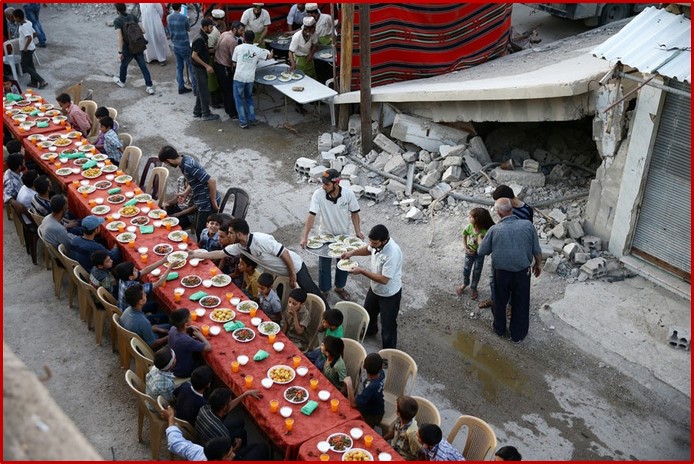
This is where we look first, to the one who is serving.

There is one further test; look at those they serve. Is it the powerful, the wealthy, the corrupt? Is it the ones who want the best seats at the community events, and who look for praise in all their ventures? Is it the ones who measure their lives by triumph over others – through their finances, or their fists?

Or it the ones so easily ignored, or airbrushed from our vision? Is it the people who cannot repay, apart from their thanks, the ones whose lives are frequently marked by exclusion and scorn? These people who, Jesus tells us, bear his likeness.

We only discern them when we look beyond ourselves, beyond our fear.

Service begun in Jesus looks neither for praise, nor reward. It humbly seeks those in need of being served.


[1] Katherine Biber, Professor of Law, UTS; Late Night Live 28.10.2026

Good Fences & Good Neighbours

…one of them, a lawyer, asked him a question to test him.  “Teacher, which commandment in the law is the greatest?”  He said to him, “ ‘You shall love the Lord your God with all your heart, and with all your soul, and with all your mind.’  This is the greatest and first commandment. And a second is like it: ‘You shall love your neighbour as yourself.’ On these two commandments hang all the law and the prophets.” [from Matthew’s Gospel 22:34-40]

Everything is here, according to Jesus. Everything.

Sadducees, lawyers and cynics have come to entrap Jesus in theology or the law, and find themselves stumbling at his feet. Their cryptic inquisition about taxes, marriage and authority is met by Jesus, slicing their Gordian knot in two. They are not seeking wisdom, or hope, but merely the life-denying gossip which avoids justice and cripples our imagination.

As their attacks dissipate, Jesus draws their – and our – attention to the gospel’s crux. Love God and love our neighbour. That’s it. All the law, and all the prophets are here.

Jesus consistently reminds us that loving God immediately leads us to those around us. Our protestations of faith and our worship mean nothing, if there is no echo of this in how we care for our community.

Like the lawyers seeking to trap Jesus, we twist interpretations and definitions, in order to justify ourselves. “Which particular neighbour did you have in mind, Jesus?” we ask in our most innocent voice, hoping for the one who mows our nature strip each week, and not the one with the leaf blower.

We decide that all that is asked of us is to tolerate our neighbour, and our responsibility diminishes almost immediately. Tolerance at is best is permissive, and at its worst is indifferent. The benign smile, the occasional wave, and we fulfil all the tepid righteousness we have defined.

More deliberately and more dangerously, we assert that we will decide who our neighbours are and the manner in which they qualify. This enables us to exclude those we have no intention of serving, and our neighbours become simply the people we choose to like, and who like us. In so doing we become card-carrying members of the cynics’ association.

The rancorous debate in our nation about immigration is the most recent – and recurring – stanza in this decline. Other iterations have included Aboriginal people, people who are same sex-attracted, Muslims, Jews and refugees.

Hannah Arendt identified disconnection as integral to societal breakdown. When someone, perhaps a leader, then nominates a particular group as responsible for our woes, real or imagined, we are on the way to disaster.

Tolerance declines into sufferance. Sufferance becomes discomfort. Discomfort becomes disconnection and blame. A simple question: when we discover that immigrants are not to blame, who will the populists accuse then?

Thus, Jesus. Love God, love neighbour.

Love creates; creates hope, justice, healing, forgiveness, community. Love imagines new relationships, and older ones restored. Love invites, embraces and reshapes community around all who have found their place. Love does not simply tolerate, but transforms, as mercy is articulated by forgiveness and restoration to new relationship.

Love reimagines our neighbourhood, shaped not by geography, or our politics, or our faith, but by our humanity, all of which is in the image of God.

Everything is here.

A Taxing Response

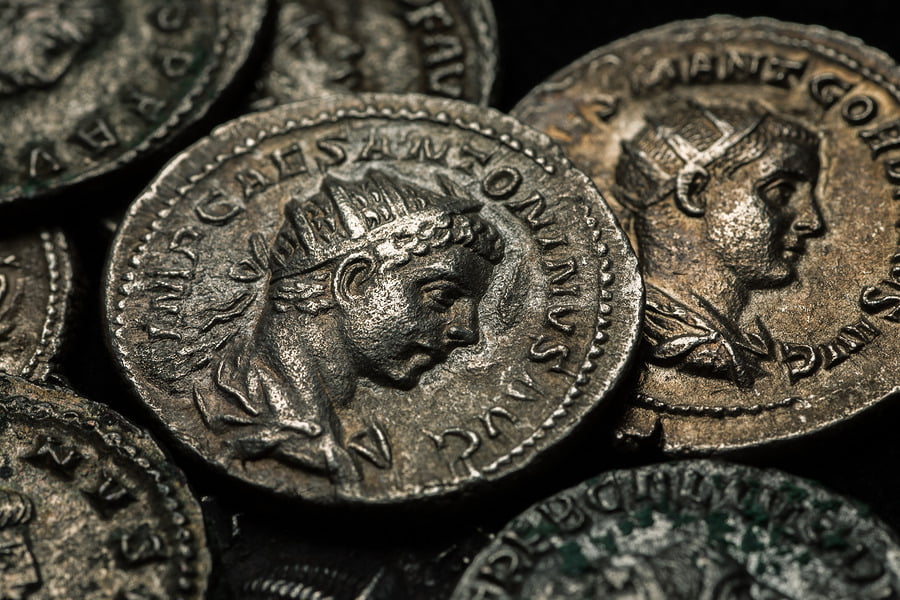
[Jesus said] “Show me the coin used for the tax.” They brought Jesus a denarius. Then he said to them, “Whose head is this, and whose title?” They answered, “The emperor’s.” Then he said to them, “Give therefore to the emperor the things that are the emperor’s, and to God the things that are God’s.”  When they heard this, they were amazed; and they left him and went away. [from Matthew’s Gospel 22:15-22]

As coins and other currency vanish from our pockets and purses, it is not only Caesar’s image, but all those other icons which we no longer glimpse at each purchase. We have an ashtray in our old Land Cruiser stuffed with coins, some fuses and a corkscrew – all of them signs of an age which is fading, or certainly less familiar to our touch.

Debates about taxation are neither new, nor fading, and the Pharisees’ malign attempt to ensnare Jesus mimics the clumsy work of a tabloid journalist, or the chorus on Sky after dark.

When faith engages with the culture in which it is exercised, there is always the danger that we begin to equate them with each other, as if they are similar. Discipleship and the economy frequently exist alongside each other, with critique and challenge, but blending them together does both a disservice.

Living our faith within our community is precisely where most of us are called; how we spend our money is often a reflection of the priorities to which Christ has called us. Notwithstanding, the call to discipleship is a more profound invitation than that of the tax office.

We watch, even now, as “christian nationalism” (lower case intended) pervades much of the political and religious conversation in places like the United States. Heresies, both minor and monstrous, are hallmarks of this perversion, such as the punishment of immigrants being falsely equated with scripture, or the nationally televised execution of a criminal heralded as a sign of righteous judgment. Ironically, the biblical responsibilities of paying tax go largely unremarked or avoided altogether.

When Jesus calls attention to the icon of Caesar on the coin, he intentionally draws our eye toward God and thus, immediately, to our neighbour.

Where do we see the image, the icon, of God? First, always, in Jesus. Then, in our neighbour. In each other.

The early church understood that the affirmation “Jesus is Lord” was more than a liturgical faith statement. It was, and remains, profoundly political; a realignment of priority, of faith, of life.

The question about tax is classic misdirection. Jesus is not fooled. The answer he offers is clear in its intent. When we attend to “the things that are God’s,” it is to our neighbours – to the poor, to the marginalised, to our enemies – that our eyes and our hearts are opened.

In a few verses’ time, Jesus will be asked which is the greatest commandment, and he will tell them to look first to God in love, and then to the image of God which surrounds us. Love God, love your neighbour as you love yourself.

Any claim to faith in Jesus which draws us from this imperative is essentially false.  We, each of us, bear the fingerprints of God. How we live will not be measured by income or expenditure,  but by how we respond to this most profound assertion: we are in the image of God.

Comparing the Kingdom of Heaven

Then [the king] said to his slaves, ‘The wedding is ready, but those invited were not worthy. Go therefore into the main streets, and invite everyone you find to the wedding banquet.’  Those slaves went out into the streets and gathered all whom they found, both good and bad; so the wedding hall was filled with guests. [Matthew’s Gospel 22:81-14]

One confronting parable follows another. A landowner, then a monarch, who tolerate no resistance, no insurrection, from those they have invited. Followers of Jesus will wrestle – uncomfortably, even unwillingly – with these parables until all is complete.

Is God (even a little bit) like this?

This violent response is the expected behaviour of history’s monarchs and dictators, of those in power who have been denied their will.  Nothing to see here.

However, look for a moment where Jesus may, in fact, be directing us. Consider the behaviour of the banquet’s invitees. No one accepts the invitation to the monarch’s wedding banquet. No one. When the monarch insists, their response is both impolitic and violent. So the king acts, as monarchs have forever acted; the people are destroyed.

Then, because this is a story and time is somewhat elastic, the banquet remains ready and new invitations issued for all and sundry. – rich and poor, good and bad alike.  In this motley, spontaneous, crew, one is wrongly dressed. He is summarily expelled.

Those who believe they are entitled treat their invitation as nothing. Perhaps they inherited their position or, were gifted their place in society through the social labyrinth some navigate with ease, and which remains a mystery to so many others. Perhaps they paid their way with favours, or finance. Perhaps their skin colour, or their gender, or sexuality, or profession, amplified their assumed eligibility.

Their sense of entitlement devalues the gift of invitation. Thus, gift becomes trophy, becomes possession, becomes what I have always deserved, becomes stagnant.

The gracious offer of God is not offered cheaply. Bonhoeffer showed us that almost a century ago, as much of the German church refused God’s invitation.  Even now, the headlong rush of the North American church (and others) towards the deceit of Christian nationalism is a harbinger for the Australian Christian community. These people regard their invitations as deserved, flaunting them publicly, decrying others.

The measure of God’s offer is the life and death of Christ; God expending everything. Discipleship begins by accepting that generosity, astonished at our invitation. When we discover the diversity of those invited beside us, both good and bad, we are humbled and uplifted.

What, then, is our response? Entitlement, or an equal service with those who invited us, with those who bore witness to us, of the mercy of God? Humility, at the company we share at this banquet, that all – not just the people we prefer – are invited to share, to live and to serve?

What of this last character, banished from the banquet? What of him?

The dress code is not about Armani, as opposed to Op Shop; it is about the servanthood we wear for every occasion, at banquet and with the broken.  We are, all of us, invited.

Now, we have people to serve.