Different Schematics

I appeal to you therefore, brothers and sisters, by the mercies of God, to present your bodies as a living sacrifice, holy and acceptable to God, which is your spiritual worship. Do not be conformed to this world, but be transformed by the renewing of your minds, so that you may discern what is the will of God – what is good and acceptable and perfect. [Pauk’s Letter to the Roman Church 12:1-2]

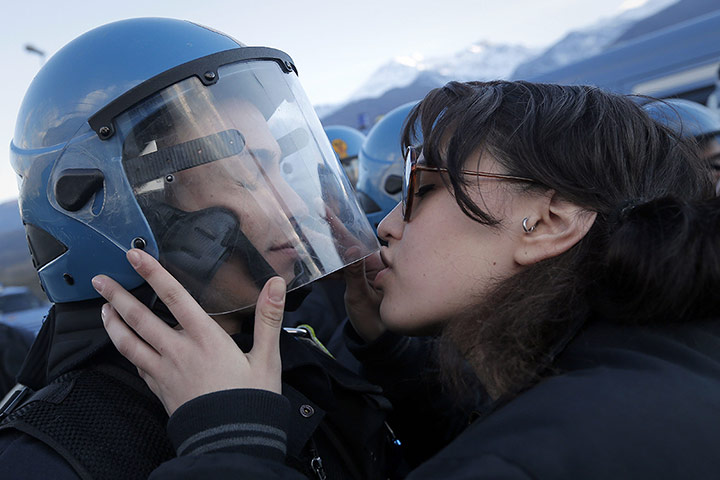
Compliance is simpler, really. Not rocking the boat.

We can observe our politics, both local and international, taking on a darker hue, reaching to polarise some, to accuse others, attacking with words and worse.

Recently, members of our Jewish (and therefore, our own) community are violently attacked. Another gathering, of our First Nations (and therefore, our own) people has a failed explosive device thrown amongst them – a weapon we are more accustomed to associating with the war in Afgahnsistan and not within our neighbourhoods. A group from our Muslim (and this, our own) community is praying near a protest, and are accosted by police and others, as if those on their knees in prayer are liable to incite harm.

Why can’t people just fit in?

There is another, coercive and corrosive form of compliance, when a government co-opts a belief system, like Christianity, nationalises it and declares that the faithful will support a certain notion of faith, of politics, of behaviour. This looks like the demand for the Ten Commandments in every school, coupled with the false association between a particular political brand and a corrupted understanding of the Gospel.

We are told: if you have true faith, it will look like this.

And then, Jesus. Jesus asking to believe and live and act and love and forgive in such a way that neighbours and enemies are not simply tolerated, or endured, but loved. Extra miles to walk, and our coats to sacrifice and forgiving four hundred and ninety times, when once certainly seems more than enough – to us. These are not astringent measures of compliance; rather, they are acts of extravagance we could not expect.  

As Jesus, so Paul.

Embroidered in the yoke of the stole presented to me at my Ordination are Paul’s words, “Do not be conformed to this world, but be transformed…” How shall we determine this transformation?

Paul talks of our being drawn into community, how we are bound together, members of each other. We are woven by the very act of God in Christ, not simply by our decision, or our sense of self-improvement.

The word we translate as “conformed” leads to our words “scheme” and “schematics” where we are shaped into compliance with the way things are. In complete contrast, the word for “transformation” gives birth to our word “metamorphosis”, as we comprehend the world, and our lives and our faith are continually renewed by the mercies of God.

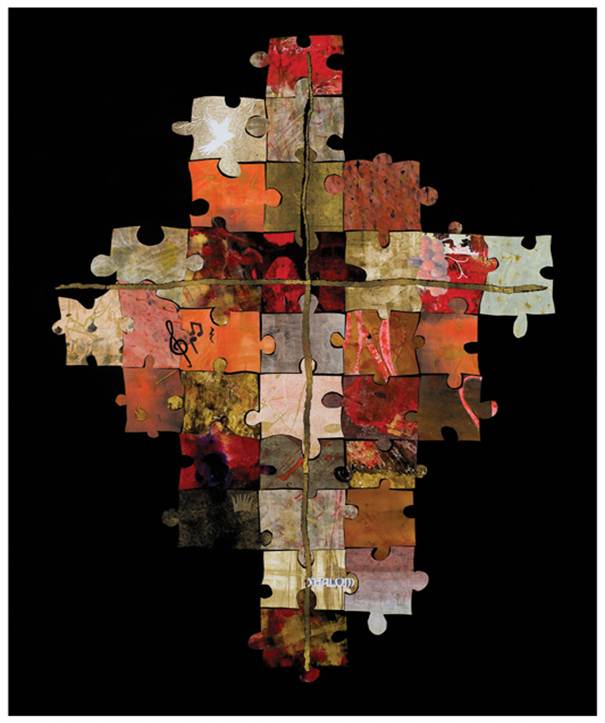
The only measure for our hope is Christ, and him crucified. The voices which demonise the weak, or the faithful, or those who are different, are simply sirens luring us to disaster. When we are unsure of our calling, or our direction, we find our bearings only in the cross, in our discipleship to the one whose call is to love, to serve and to forgive. And perhaps, to sacrifice everything.

This is where the shape of life is found; in Jesus Christ, the risen crucified One.  

Faith In Voice

Just then a Canaanite woman from that region came out and started shouting, “Have mercy on me, Lord, Son of David; my daughter is tormented by a demon.”But he did not answer her at all. And his disciples came and urged him, saying, “Send her away, for she keeps shouting after us.” He answered, “I was sent only to the lost sheep of the house of Israel.”5 But she came and knelt before him, saying, “Lord, help me.” [from Matthew’s Gospel 15:21-28]

There’s a social media meme commenting that each household has one member who stacks the dishwasher like a Scandinavian architect and another who loads it like a possum on meth.

We know these people, or perhaps we are them … I have ways I do certain things, which maintain a level of comfort for me. They might be idiosyncratic and inconsequential, like how I hang out the washing (or stack the dishwasher). They may, however, have more weight, such as how I view the world, how I approach my vocation, or understand other people.

The sequel to this is what may lead me to change my mind? As our community appears to become more polarised, we increasingly socialise with people of similar views, avoiding those with whom we might disagree. This is apparently true socially, poetically and theologically.

How will we grow and change? How will we hear those voices which will challenge and transform our thinking? How will we disagree, even have disputes, in ways which are appropriate and healthy?

How do we change the algorithm?

Jesus has a singular sense of his vocation: his community, the people of Israel. The wrong person has found their way to Jesus – foreign, woman, outside his mission plan – and he ignores her. The disciples want to be even more assertive and send her away.

Jesus’ niggardly response is that he has other priorities. When she kneels, begging for her daughter’s life, his response to this Palestinian woman is derisive at best and appalling at worst. Then, as now, casting any woman as an animal is destructive.  

We cannot know Jesus’ mind; what impairs his response, what cultural boundaries hinder his expected mercy. The honesty of the gospel writers is to include this least complimentary account of Jesus to someone in need.

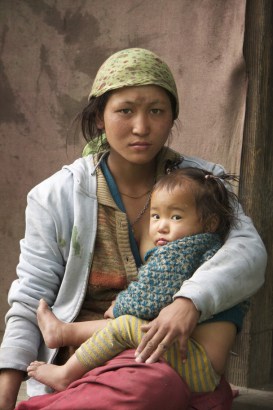
So, what changes him?  She does. This unnamed, indefatigable mother, advocates for her child.  She will not let Jesus go.

How shall we attend to those voices that we need to hear, when we are accustomed to listen elsewhere? We are trained to hear only certain voices, those which fit our sense of self and society, while disregarding others, as if they do not even exist. These symptoms are international and personal, they are in our social circles and our communities of faith. We airbrush artists and silence writers and journalists because of the discomfort they cause, and yet real hope lies in listening, attending to, and addressing – with integrity – those voices as they speak. More especially when they speak from the fractured places, from the edges.

Jesus’ mercy arises from her courage and faith. Perhaps we need more courage and faith to listen to those we usually choose to ignore, or fail to notice. What courageous faith might we need to stand with those whose names, whose communities, whose children are at risk of being consigned to despair and destruction?

Where will Jesus be found?