Drafting Stock

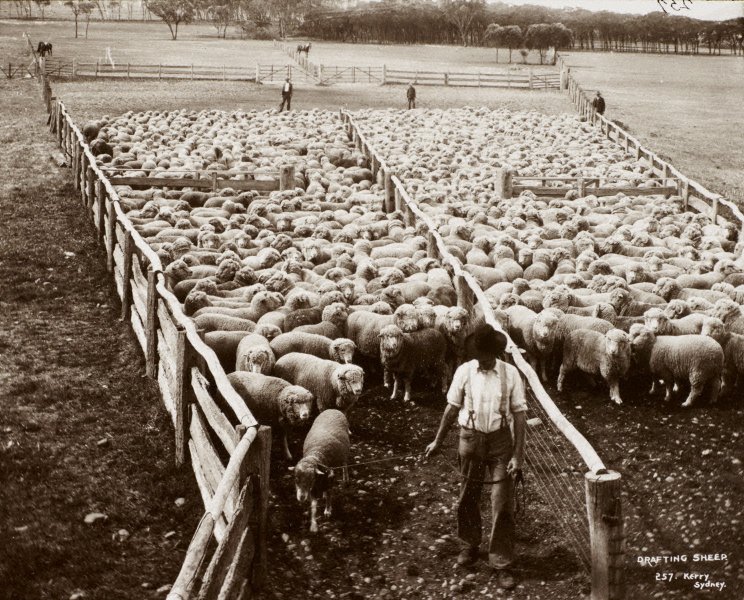
As for you, my flock, thus says the Lord GOD: I shall judge between sheep and sheep, between rams and goats: Is it not enough for you to feed on the good pasture, but you must tread down with your feet the rest of your pasture? When you drink of clear water, must you foul the rest with your feet? And must my sheep eat what you have trodden with your feet, and drink what you have fouled with your feet? [from Ezekiel 34:11-31]

In a perverse affirmation of this week’s readings, we watch politicians and their constituents, both local and overseas, reflect the potency of both Jesus’ words and those of Ezekiel, speaking centuries before.

As I drove to work, an Australian politician was justifying a proposal to halve our humanitarian refugee intake. In the next breath, he spoke about how generous we are as a nation and, with a barely a pause, “…which is why we need to make this cut.”

We watch populists – and worse – lay blame for current social and economic challenges at the feet of those least able to defend themselves. If only refugees and immigrants and the poor and overseas students and badly behaved children and aboriginal teenagers and transgender people and feminists and the unemployed and Muslims and people of other nationalities didn’t put such pressure on the economy (cause us such problems).
Many of those with political, financial and media resources muddy the waters about what is really happening, absolving themselves in the process. Our indignation at what we see and hear is enhanced when we realise that Ezekiel is equally indignant at the behaviour of those people fifteen hundred years before.

Exactly sixty-three years ago, in a speech he would never deliver, John F. Kennedy had echoed the prophet,

“…those who confuse rhetoric with reality and the plausible with the possible will gain the popular ascendancy with their seemingly swift and simple solutions to every world problem. There will always be dissident voices heard in the land, expressing opposition without alternatives, finding fault but never favour, perceiving gloom on every side and seeking influence without responsibility. Those voices are inevitable.”[1]

Our ancient and modern prophets appear sufficient. Jesus, however, takes us further.

At the close of Matthew’s twenty-fifth chapter, Jesus not only challenges the powerful and the populists, but each and all if us. Jesus confronts us with a magnification of Ezekiel’s polemic.

Is it possible that, in these, the least in our community, we will meet Jesus? Not only the hungry and thirsty and barely clothed, but the stranger and the prisoner bear the face of Christ.

No loopholes here. The ones we would accuse, blame, punish and exile are precisely the ones Jesus identifies as himself.

We can muddy the water ourselves here, pondering eternity; this is not the story. Rather than lifting our eyes to the heavens, this story anchors us here. This immigrant. This imprisoned child. This person discovering their humanness and identity. This is Jesus.

Love God, with everything, and your neighbour.


[1] John F. Kennedy; Remarks prepared for delivery at Dallas Texas, 22nd November, 1963.
Investment Advice

[Jesus said] “For it is as if a man, going on a journey, summoned his slaves and entrusted his property to them; to one he gave five talents, to another two, to another one, to each according to his ability. Then he went away”. [from Matthew’s Gospel 25:14-15]

As Matthew’s Gospel is drawing towards the ultimate moments of Jesus’ betrayal, crucifixion and resurrection, the author recounts some of the most confronting of the stories Jesus tells.

Parables about banquets where guests gathered form the streets are still expelled for poor dress sense; tenants in a vineyard murder the landlord’s son and are punished equally in their turn. Unfaithful slaves and unprepared bridesmaids are punished for their failures. Three slaves are each gifted an extraordinary amount of money, and their master holds them to account for how they invest – or not.

Discipleship is not only invitation. There is more. In the midst of relating these compelling and disturbing parables, Jesus is asked by a lawyer about the greatest commandment. The question is insincere, crafted as a test, but Jesus’ answer is the heart of the whole Gospel.

Love God. And love neighbour. Embracing the first commandment inevitably leads to our embrace of those around us.

The searching rigour of these stories Jesus tells asks much of us. What will we do with these gifts given? How ready are we for the calling upon us? There are resources placed in the palms of our hands; what is asked of us, by Jesus?

I have spoken and written previously about the nature of gifts. We receive them, treasure them, and then decide what we should do. We can become nervous about risk, about loss, about mistakes we might make and the temptation increases to do nothing. We place the gift on our mantel, or in a secure place, holding them to ourselves, convinced that when we are asked, we will use them.

Gift becomes possession, and everything changes. The possession becomes necessary for how we view the world and define ourselves, and the fear of what might happen can become overwhelming. So, we do nothing. We build a safe and lock the gift away.

At its worst, the possession becomes narcotic, necessary to remind ourselves that we are valued, as we forget both the reasons for the gift and the nature of the giver.

In next week’s reading, the plaintive cry of those who have failed in their response is “If we had known it was you, we would have cared for-visited-fed-clothed-loved our neighbour.” It was always Jesus, every wounded, diminished life. Always.

But our gift was sealed away and safe from risk. And service.

Nothing can prevent the mercy of God; nothing is able to inhibit God’s love for each and all. That, thankfully, is not in our hands. Instead, it is our call to participate in the economy of God, investing the gifts God has offered us in the lives of others.

Burying our gift, ostensibly for safety, or arising from our fear, is not the answer. The radical call upon us is to serve the person before us, to share the value in which we have been found with those who believe themselves lost. God has risked his greatest gift with us, and restored creation; we are parables  of this astonishing embrace.

A Woke Church

“Then the kingdom of heaven will be like this. Ten bridesmaids took their lamps and went to meet the bridegroom. Five of them were foolish, and five were wise. When the foolish took their lamps, they took no oil with them; but the wise took flasks of oil with their lamps. As the bridegroom was delayed, all of them became drowsy and slept. But at midnight there was a shout, ‘Look! Here is the bridegroom!’ Then all those bridesmaids got up and trimmed their lamps. The foolish said to the wise, ‘Give us some of your oil, for our lamps are going out.’ … Keep awake therefore, for you know neither the day nor the hour.” [from Matthew’s Gospel 25.1-13]

Being woken at midnight is rarely easy. Partying, nightshift, neighbours’ dogs barking, family emergency, are all reasons for midnight activity. When we have the additional task of looking our best, of being ready, it can be distinctly difficult.

Half the maidens in this improbable parable are unready; Jesus describes them as foolish. I am not sure how often bridegrooms were so severely delayed, nevertheless our scene is set. They do not have the resources necessary for what awaits them.

Much of this generation in the church is waking to the realty of midnight, conscious that we are sorely ill-prepared for the season in which we find ourselves.

Waking up in this country and time, what does it look like? Both our formal and cultural educations were markedly lopsided, ensuring we were less ready than required for the arrival of the world in which we live and bear witness.

Our knowledge of history, geography and literature reveal a distinct bias toward British, North American and select European heritages. The bias extended to faith traditions; we were educated more about Protestant and Roman Catholic distinctions than the profound and diverse stories of Judaism, Islam, Hinduism and Buddhism.

Our knowledge of, and appreciation for, the sixty millennia of our First Nations peoples were truncated into cliché for most of us at school. We were soundly asleep.

I have wonderful conversations with my Iranian barber about Persian history and politics and the implications of the last fifty years, much of which remains unknown in “western” countries. I learn from Ukrainian, Pasifika, Armenian and Palestinian colleagues about histories, traumatic and courageous, which extend beyond the narrow lens with which we have been trained to see.

Much of our faith formation has been similarly lacking. What resources were we offered to wake and serve in this world around us, to have enough capacity to navigate such a challenging time? How do we navigate technological changes, corruption and the fracturing of alliances we have always known? How is the Gospel heard and spoken?

Frequently, the western church has been preoccupied talking to itself about itself. We are unsure of how to listen (and then, perhaps to speak) with the plethora of faith communities, the members of which all bear the image of God. We must be awake to world in which we live.

Our astonishing story of God with us in Jesus Christ, crucified and risen, is so much more than a biblical cliché. We bear witness to an event which transformed the creation, we are participants in the intention of God to save all of history.

Our own story of discovering our worth and that we are loved needs to be held with the same value as those whose story we have never heard and can barely imagine. Our resource is first in the Holy Spirit, and then in each other, as we wait – and act – together for God’s intention to be realised.

We need to wake up.