No, “if your enemies are hungry, feed them; if they are thirsty, give them something to drink; for by doing this you will heap burning coals on their heads.” Do not be overcome by evil, but overcome evil with good. [Paul’s Roman Letter 12:20-21]
We are invited, even commanded, to think differently. To reimagine what it means to be human, living with others, living in community, discipled to Christ.
The inherent weakness of faith communities is when they identify themselves simply as social groups, reflected in their worship gatherings and community service, perhaps with some small group activities, which reflect their protected life.
This will be the flawed hallmark of their community: self-protection. In a world which seeks to ameliorate risk, even to avoid it altogether, a faith community can be precisely that: a place where we are immured from any possibility of being challenged, disturbed or, transformed. We will worship, witness and serve in ever decreasing circles, prophesying disaster if we imagine an alternative, or contemplate new ways. What if we lose our way, our sense of self, our resources?
There is something profoundly radical about the practice of passing the peace during worship. When we have prayed, seeking and receiving God’s forgiveness, we then share the peace which arises from that generous mercy. We deliberately offer – and receive – peace amongst those we love and those whom we find difficult to love. Sadly, many of us make light of it, chatting about our week. To share Christ’s peace only with those with whom we are comfortable is entirely contrary with the essential nature of God’s mercy.
Our community can never simply be comprised of people who think and speak and vote and worship and love just like me. The best-known psalm asserts “You prepare a table for me, in the presence of my enemies”, to remind each and all of us about the nature of community, especially in the hands of God.
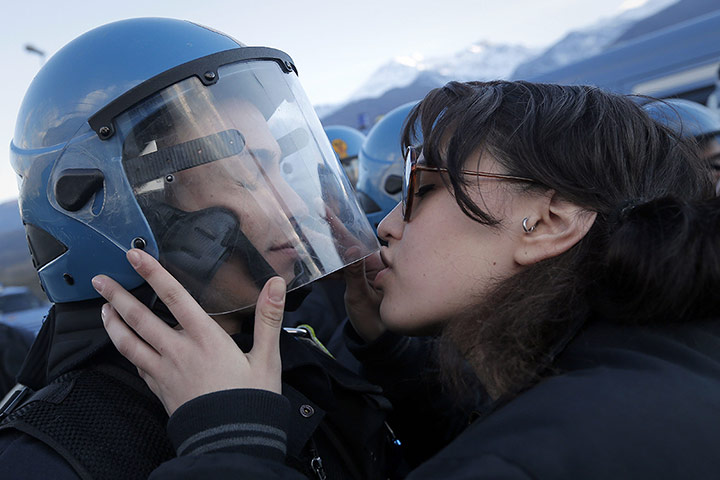
In a public space riven with persecution and violence against the nascent followers of Christ, Paul tells them to bless those who would harm them, behaviour far in excess of either tolerance or avoidance; revenge is not even contemplated. Disciples at risk or torture are entreated to provide food and rink for those who would cause them that harm. Excessive, indeed.
This behaviour locates itself in Jesus Christ. In seeking to save our life, we will lose it. It is only in losing our life, for Christ’s sake, that we truly find it.
Every instinct (and our risk register) tells us to avoid any kind of risk, yet the coherent core of the gospel is a God who has risked everything for humanity and creation. The essence of this is that we serve and save those who would harm us. Those who oppose us and seek our diminishment are those we seek to overcome with blessing. It is for their renewal, their inherent worth, that we act.
We are Christ’s disciples, who served us in order to save us. The consequence of Christ’s excessive behaviour is that we are overcome with mercy, life and hope. A risk worth taking.


”Those who oppose us and seek our diminishment are those we seek to overcome with blessing.”
Taking that on as an area for improvement.
Thanks.
LikeLike