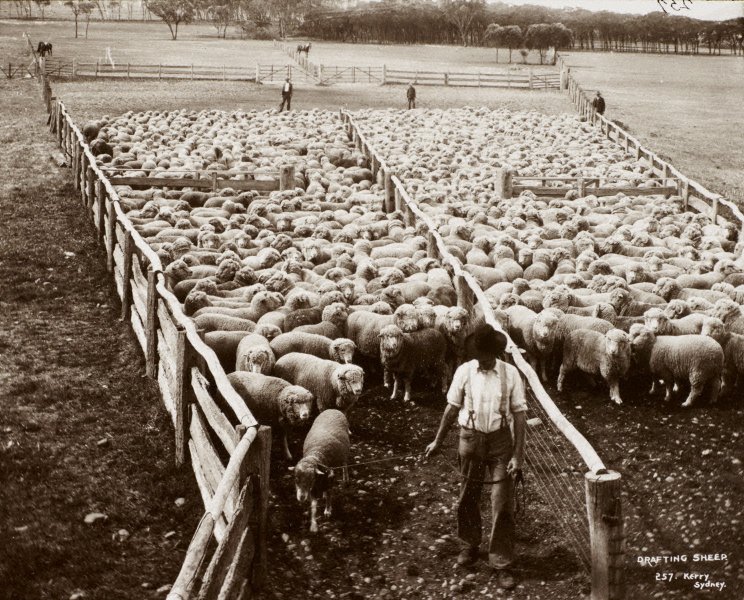
As for you, my flock, thus says the Lord GOD: I shall judge between sheep and sheep, between rams and goats: Is it not enough for you to feed on the good pasture, but you must tread down with your feet the rest of your pasture? When you drink of clear water, must you foul the rest with your feet? And must my sheep eat what you have trodden with your feet, and drink what you have fouled with your feet? [from Ezekiel 34:11-31]
In a perverse affirmation of this week’s readings, we watch politicians and their constituents, both local and overseas, reflect the potency of both Jesus’ words and those of Ezekiel, speaking centuries before.
As I drove to work, an Australian politician was justifying a proposal to halve our humanitarian refugee intake. In the next breath, he spoke about how generous we are as a nation and, with a barely a pause, “…which is why we need to make this cut.”
We watch populists – and worse – lay blame for current social and economic challenges at the feet of those least able to defend themselves. If only refugees and immigrants and the poor and overseas students and badly behaved children and aboriginal teenagers and transgender people and feminists and the unemployed and Muslims and people of other nationalities didn’t put such pressure on the economy (cause us such problems).
Many of those with political, financial and media resources muddy the waters about what is really happening, absolving themselves in the process. Our indignation at what we see and hear is enhanced when we realise that Ezekiel is equally indignant at the behaviour of those people fifteen hundred years before.
Exactly sixty-three years ago, in a speech he would never deliver, John F. Kennedy had echoed the prophet,
“…those who confuse rhetoric with reality and the plausible with the possible will gain the popular ascendancy with their seemingly swift and simple solutions to every world problem. There will always be dissident voices heard in the land, expressing opposition without alternatives, finding fault but never favour, perceiving gloom on every side and seeking influence without responsibility. Those voices are inevitable.”[1]
Our ancient and modern prophets appear sufficient. Jesus, however, takes us further.
At the close of Matthew’s twenty-fifth chapter, Jesus not only challenges the powerful and the populists, but each and all if us. Jesus confronts us with a magnification of Ezekiel’s polemic.
Is it possible that, in these, the least in our community, we will meet Jesus? Not only the hungry and thirsty and barely clothed, but the stranger and the prisoner bear the face of Christ.
No loopholes here. The ones we would accuse, blame, punish and exile are precisely the ones Jesus identifies as himself.
We can muddy the water ourselves here, pondering eternity; this is not the story. Rather than lifting our eyes to the heavens, this story anchors us here. This immigrant. This imprisoned child. This person discovering their humanness and identity. This is Jesus.
Love God, with everything, and your neighbour.
[1] John F. Kennedy; Remarks prepared for delivery at Dallas Texas, 22nd November, 1963.

