…the owner of the vineyard said to his manager, ‘Call the labourers and give them their pay, beginning with the last and then going to the first.’ When those hired about five o’clock came, each of them received the usual daily wage. Now when the first came, they thought they would receive more; but each of them also received the usual daily wage. And when they received it, they grumbled against the landowner … But he replied to one of them, ‘Friend, I am doing you no wrong; did you not agree with me for the usual daily wage? … Am I not allowed to do what I choose with what belongs to me? Or are you envious because I am generous?’ So the last will be first, and the first will be last.” [Matthew’s Gospel 20:1-16]
This is one of the passages in which a really energised argument can commence. I have sat in a group after this parable was read, where one person grumbled about “bloody socialists”, while another countered with a comment about capitalists underpaying people and sparking injustice.
So, here we are, with another of Jesus’ disruptive parables. Is it, as economists like to call it, creative disruption, or is it something else? Wikipedia defines creative disruption as “a radical change in a marketplace brought about by the overturning of existing conventions”. Once again, Jesus.
Jesus, with the stories of badly-behaved sons and better-behaved Samaritans, with tales of tax collectors and pharisees, and slaves being forgiven debts of a bazillion dollars.
How do we respond when Jesus offends our sensibilities? Traditionally, many within the church spend considerable time and energy seeking to ameliorate the stories, diluting the language and airbrushing the rough images.
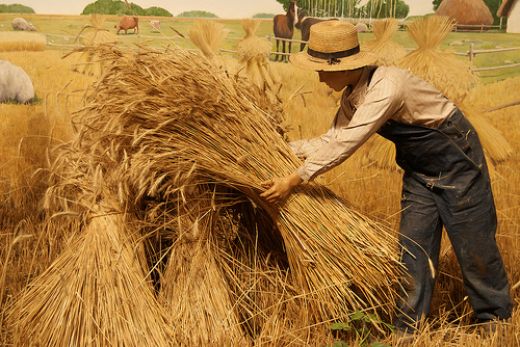
In the case of this parable, throwing in our lot with the socialists, or the capitalists would be to miss the comprehensive challenge of engaging in the economy into which Jesus invites us. This is much more than an argument about the social daily wage, or the measure of labour done. There are elements which can be explained, or perhaps even explained away, which only provides a disservice to the provocation Jesus offers us.
What if the reign of God – the economy of God – invites, serves and eventually redeems each and all of us? What if those who arrive in the last minute are rewarded as completely as those who have been present for the entire day? What if the measures of God’s economy are the mercy and life offered in Jesus, and not the pay scales of the world in which we live?
We can feel disgruntled at this moment; we have worked hard for most of the day, faithfully and well. They have appeared at the last moment, or after us, at least, and they are rewarded equally?
In the current fraught political conversation about immigration, a whole new meaning is given to “those who arrive later than us”. The definition of fairness has become bastardised by punishment and self-interest, leaving us in a context of shouting and accusation. The spoils from this go only to the punishers.
Jesus measures out our lives and value by the generosity of God, not by hours worked, or arbitration. This generosity, this grace, is both unceasing and beyond measure. This assurance is held, not in our own hands, but in the nail-scarred hands of Christ. Thus, we are able to offer this hospitality in our turn, disrupting and creating as God has done for us.

