“What do you think? A man had two sons; he went to the first and said, ‘Son, go and work in the vineyard today.’ He answered, ‘I will not’; but later he changed his mind and went. The father went to the second and said the same; and he answered, ‘I go, sir’; but he did not go. Which of the two did the will of his father?” They said, “The first.” Jesus said to them, “Truly I tell you, the tax collectors and the prostitutes are going into the kingdom of God ahead of you. For John came to you in the way of righteousness and you did not believe him, but the tax collectors and the prostitutes believed him; and even after you saw it, you did not change your minds and believe him.” Matthew’s Gospel 21:28-32
It can be unsettling to read Jesus’ words, the stories he tells us. If we place ourselves honestly in the crowd he is addressing, we can find ourselves standing somewhat awkwardly.
When we celebrate communion, speaking about hunger and thirst, very few people I have served come suffering from lack of food. Most come well fed and watered, sharing in the benefits of our community’s prosperity. I would assert that almost no one has come unfed, or starving. If they did, is there enough for them, to feed them? Would we sacrifice our own piece of bead, our share of wine, that they might be satisfied?
We talk about sacrifice, even poverty. In the western church, we have spiritualised these to a considerable extent, because most people we know have enough for their daily bread and more.
Is this the appropriate time to mention the astringency of most communion meals – tiny cubes of bread, tasteless wafers, and thimbles of juice, or minimal sips from a chalice? What metaphor resides here for those who hunger and thirst?
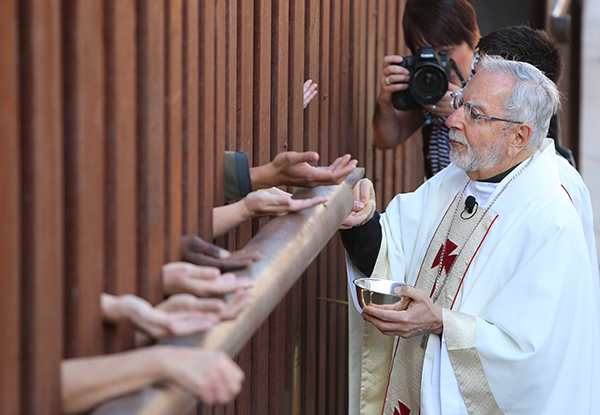
Jesus has just ripped through the temple; his anger (as always) is because those who most need it have been prevented from finding life – food, healing and forgiveness.
When people have lived broken lives, the offer of healing, of hope, is considerably more than a sermon theme. When we reduce sin, micro-managing it into “sins”, measuring out our lives in instances of misbehaviour, or naughty thoughts, we diminish the real impact of sin on our world, on those around us and on our own lives.
When women and their children live under the violence of coercive control, what can a community of faith offer which will serve and, even offer safety to, them? When a person in addiction believes they deserve their own suffering, what might we give to them, which offers life, not judgment?
The missionary D.T. Niles is quoted as saying that evangelism is just one beggar telling another beggar where to find food. What is food, for those who are starving?
Do not misunderstand me. Everyone needs nourishment in their lives.
Jesus reminds us that those who are hungry know food when they tase it. Not when they read the menu, or see it on a website.
Matthew’s Gospel leads us through Jesus’ consistent reminders that we are called to act, that our words or protestations of faith have far less merit than the acts which serve, advocate for, and protect. One son proclaims obedience; one son articulates it with his life.
Service is the tangible practice of our faith; this is where we are called by Jesus Christ.

